
Social Justice and Strategic Litigation Program
Under this program, CEFROHT uses legal empowerment, legal research, and litigation to advance the right to adequate living by ensuring social justice, climate justice, and economic justice. CEFROHT employs a Human Rights-Based Approach (HRBA).
The program is double-barreled, as the title suggests, with activities under the Social Justice Program and activities under Strategic Litigation.
Program Objectives
- To use legal empowerment, legal research, and litigation to advance the right to adequate living through social justice, climate justice, and economic justice.
- To publicize the Human Rights Enforcement Act as a legal tool to resolve cases expeditiously.
SOCIAL JUSTICE
Legal Empowerment
The Social Justice Program aims to empower marginalized groups (rights holders) by equipping them with knowledge to understand and advocate for their rights through legal mechanisms. The program also empowers duty bearers by educating them on their legal obligations.
This is achieved through trainings and community barazas, where duty bearers (such as local government officials, judicial officers, and other stakeholders) engage with rights holders (the community). These interactions break social and economic barriers, bridge knowledge gaps, and foster holistic solutions.
Each year, CEFROHT conducts over 20 trainings on Economic, Social, and Cultural Rights, including:
- Access to Justice using the Human Rights Enforcement Act
- The right to adequate food
- Land rights and equity
- Seed sovereignty and agroecology
Legal Research
CEFROHT conducts legal research using a Human Rights-Based Approach to analyze laws and engage stakeholders in policy advocacy. This includes examining issues affecting the right to adequate food and sustainable living, producing position papers and legal briefs, and leveraging these documents to influence policies.
STRATEGIC LITIGATION
Under this program, CEFROHT uses the courts to advance policy objectives. The litigation efforts are divided into two categories:
Public Interest Litigation
This involves non-adversarial litigation as an advocacy tool to influence government and stakeholder policies through court declarations and directives. CEFROHT engages in litigation at both regional and national levels.
Regional-Level Cases
- The EACOP Case
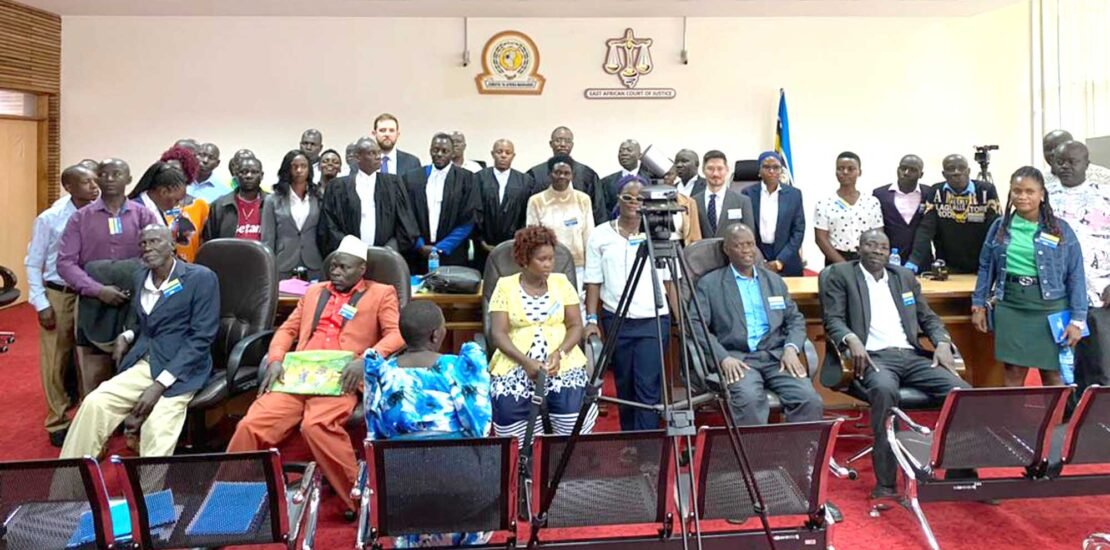
CEFROHT sued the governments of Uganda and Tanzania, along with the EAC Secretariat, in the East African Court of Justice (EACJ) for signing agreements permitting the East African Crude Oil Pipeline (EACOP). The case highlights severe environmental risks, threats to biodiversity, the Lake Victoria basin, and livelihoods of affected communities, arguing that the project violates the EAC Treaty. - The GMO Case
CEFROHT represents smallholder farmers in the EACJ against Kenya’s decision to lift the GMO ban. The case argues that porous borders within the EAC make containment impossible, yet other member states lack regulatory frameworks for GMOs. CEFROHT collaborates with Kenyan CSOs opposing GMOs.
National-Level Cases
- The Breastfeeding Case
Challenges Uganda’s 60-day maternity leave policy, which contradicts WHO’s recommendation of exclusive breastfeeding for six months. - The School Feeding Case
Opposes ministerial guidelines mandating parent-led school feeding in government/UPE schools, given that 21% of schoolchildren are orphans or too vulnerable to afford meals. The case highlights child-led households with no adult support. - The Restriction of Marketing/Advertising Case
Challenges the lack of regulations on unhealthy food and sugar-sweetened beverages marketed to children.
These cases aim to advance the right to food and sustainable living.
Fighting for food justice and land rights?
Join CEFROHT in empowering communities through advocacy and sustainable agriculture.
I had lost all hope after people tried to take my land in Kiboga. But CEFROHT helped me for free and took my case to court. Because of them, I got my land back. I can now farm and take care of my children. I thank CEFROHT so much for standing with me.

-
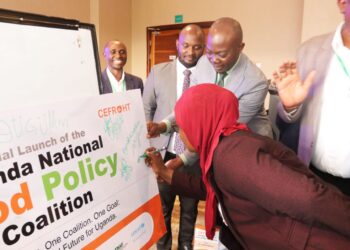
One Voice, One Label: Uganda Launches a Food Policy Coalition to Tell the Truth About Our Food
Why lawyers, farmers’ advocates, consumer groups, students, and journalists have joined forces to put clear warning labels on unhealthy food, and why CEFROHT is in the thick of it. Line up ten packaged snacks on a table. Biscuits, crisps, noodles, a juice or two. How many of them would you guess are too salty to
October 7, 2026 -
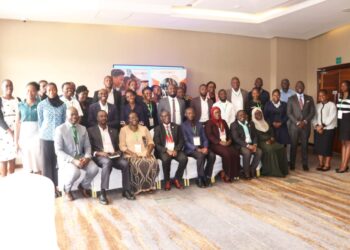
Uganda’s Policymakers Commit to Warning Labels on Unhealthy Food
How a single day of dialogue with 70 policymakers and partners moved Uganda closer to clear warnings on foods high in salt, sugar, and fat, and why we will not let the momentum slip. Pick up a packet of biscuits, a soda or a bag of crisps in any Kampala supermarket and turn it over.
October 6, 2026 -

Bringing the Law to the Feast: CEFROHT’s Fight for the Right to Food at Terra Madre 2026
What a Ugandan team of lawyers and food rights advocates carried into the world’s biggest gathering of the Slow Food movement, and what we carried home. “So what exactly does a legal organization do at a food festival?” We heard some version of that question more than once in Turin. It was a fair one.
October 3, 2026 -
“He Who Controls Seed, Controls You”: Why We Are Asking EALA to Rewrite the EAC Seed Bill
Why CEFROHT told East African lawmakers to rewrite the proposed EAC Seed Bill, or let it go. Ask a farmer in Koboko where her groundnut seed came from and you may get a long answer. From her mother. From a neighbor who swapped it for beans. From a variety the village has been quietly improving,
October 3, 2026