
Seed Sovereignty Campaign
CEFROHT’s Seed Sovereignty Campaign is a cornerstone of our broader mission to promote healthy diets through supportive laws and effective implementation systems. By safeguarding the rights of smallholder farmers—especially women and indigenous communities—to save, use, exchange, and sell traditional seeds, the campaign ensures access to diverse, nutrient-rich, and culturally appropriate food.
We position seed sovereignty not only as an agricultural issue but also as a critical human rights concern, intrinsically linked to the right to adequate food, the right to health, and the right to cultural identity. Our work aligns with international standards such as the UN Declaration on the Rights of Peasants and Other People Working in Rural Areas (UNDROP), emphasizing that healthy diets begin with seed diversity and farmer autonomy. Through legal empowerment, policy advocacy, and community action, we advocate for regulatory frameworks that protect indigenous seed systems and strengthen resilient, sustainable food systems capable of delivering nutritious food for all.
The Problem
Across Africa, farmers have historically relied on seeds saved from their own harvests or exchanged with neighbors. These traditional seeds are adapted to local climates and soils, making them reliable and essential for food security. However, these time-tested practices are now under severe threat. Large seed companies are pressuring farmers to abandon their own seeds in favor of commercial varieties, which must be repurchased every season. Many of these commercial seeds are non-replantable, trapping farmers in a cycle of dependency.
This shift has dire consequences. Many farmers cannot afford the recurring expense of commercial seeds, which often require chemical fertilizers and pesticides to thrive—increasing costs and degrading soil health over time. Additionally, crop diversity is shrinking. Where farmers once cultivated a wide variety of indigenous crops, they are now incentivized to grow only a few commercial varieties. This loss of biodiversity weakens food systems and reduces communities’ resilience to climate change.
At its core, this issue stems from the consolidation of seed control by a handful of corporations. When farmers lose the right to save, share, or replant their own seeds, they lose their autonomy. Generational knowledge is eroded, threatening not just food security but also cultural heritage and the ability to grow healthy, locally adapted food.
Our Approach
Our campaign addresses concerns that Uganda’s seed laws and policies increasingly favor commercial seed certification systems, marginalizing traditional practices and even criminalizing seed saving and sharing. CEFROHT intervenes by:
- Providing legal education to farmers on their rights under national and international law.
- Conducting constitutional and legal analyses of problematic legislation, such as the Plant Variety Protection Act.
- Engaging policymakers to reform laws that undermine indigenous seed systems and traditional knowledge.
To preserve seed diversity, we support community seed banks and organize seed fairs, enabling farmers to exchange seeds freely. These initiatives protect farmer autonomy, enhance biodiversity, and promote climate adaptation. We also document indigenous seed knowledge, particularly the expertise of women, who are often the primary custodians of seed traditions.
Beyond local efforts, we engage in national and regional advocacy, challenging intellectual property regimes that threaten seed freedom. CEFROHT collaborates with the Ministry of Agriculture, Animal Industry and Fisheries (MAAIF), the Uganda National Council for Science and Technology, and regional networks like the Alliance for Food Sovereignty in Africa (AFSA) to resist seed privatization. We advocate for public procurement policies that prioritize farmer-saved seeds, especially in programs like school feeding initiatives.
Additionally, our youth-focused programs—including Food and Law Clubs, debates, trainings, and writing competitions—raise awareness of seed sovereignty as a legal, cultural, and social justice issue. We empower young people to advocate for policies that protect seed freedom and Uganda’s biodiversity from corporate control.
Conclusion
The Seed Sovereignty Campaign is about reclaiming farmers’ rights, preserving Uganda’s agricultural heritage, and ensuring food systems remain in the hands of the people. At CEFROHT, we cultivate justice from the soil up—where every saved seed is an act of resistance and resilience.
Fighting for food justice and land rights?
Join CEFROHT in empowering communities through advocacy and sustainable agriculture.
I had lost all hope after people tried to take my land in Kiboga. But CEFROHT helped me for free and took my case to court. Because of them, I got my land back. I can now farm and take care of my children. I thank CEFROHT so much for standing with me.

-
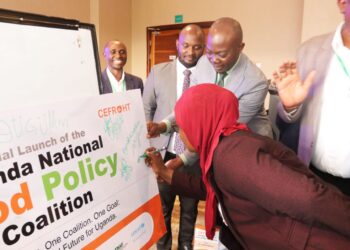
One Voice, One Label: Uganda Launches a Food Policy Coalition to Tell the Truth About Our Food
Why lawyers, farmers’ advocates, consumer groups, students, and journalists have joined forces to put clear warning labels on unhealthy food, and why CEFROHT is in the thick of it. Line up ten packaged snacks on a table. Biscuits, crisps, noodles, a juice or two. How many of them would you guess are too salty to
October 7, 2026 -

Uganda’s Policymakers Commit to Warning Labels on Unhealthy Food
How a single day of dialogue with 70 policymakers and partners moved Uganda closer to clear warnings on foods high in salt, sugar, and fat, and why we will not let the momentum slip. Pick up a packet of biscuits, a soda or a bag of crisps in any Kampala supermarket and turn it over.
October 6, 2026 -

Bringing the Law to the Feast: CEFROHT’s Fight for the Right to Food at Terra Madre 2026
What a Ugandan team of lawyers and food rights advocates carried into the world’s biggest gathering of the Slow Food movement, and what we carried home. “So what exactly does a legal organization do at a food festival?” We heard some version of that question more than once in Turin. It was a fair one.
October 3, 2026 -
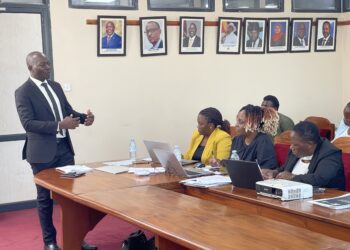
“He Who Controls Seed, Controls You”: Why We Are Asking EALA to Rewrite the EAC Seed Bill
Why CEFROHT told East African lawmakers to rewrite the proposed EAC Seed Bill, or let it go. Ask a farmer in Koboko where her groundnut seed came from and you may get a long answer. From her mother. From a neighbor who swapped it for beans. From a variety the village has been quietly improving,
October 3, 2026