
Who is responsible for Feeding Uganda’s most vulnerable children? CEFROHT just helped rewrite the answer.
- May 2, 2026
- Posted by: Cefroht Manager
- Category: Advocacy
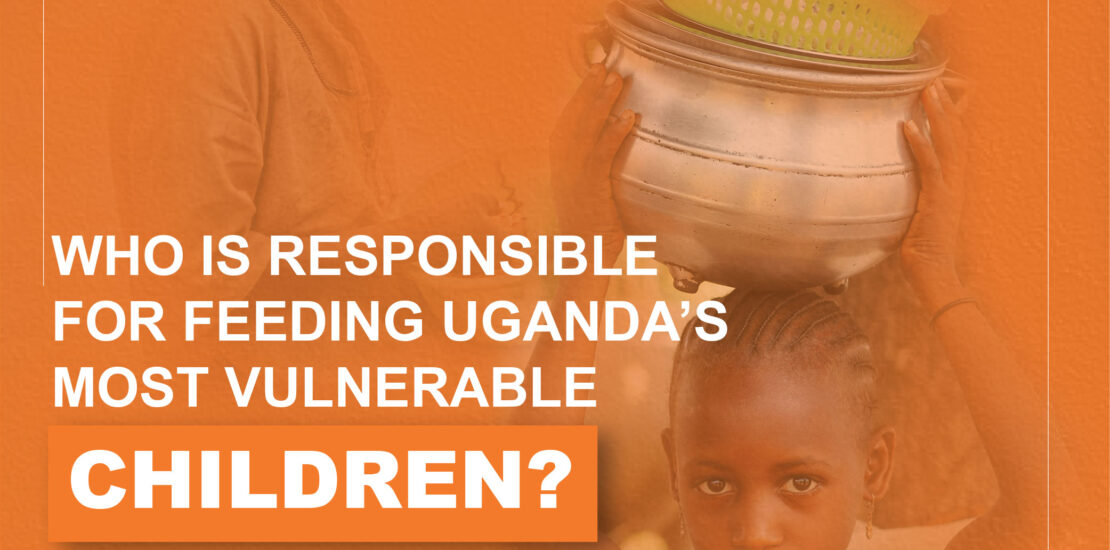
On 24th and 25th March, CEFROHT, together with other partners invited by the Initiative for Social and Economic Rights (ISER) Uganda, conducted a review of the Pre-Primary, Primary, and Post-Primary Education Act, a rare and critical opportunity to examine how Uganda’s foundational law can be strengthened to better protect children’s rights to food, health, and education.
CEFROHT’s contributions focused on addressing a key gap in the current framework where responsibility for food was previously placed solely on parents. Through our submissions, this position was reconsidered, leading to a shift in Section 6 and related provisions to recognize school feeding and basic medical care as shared responsibilities between the government and parents. The revised approach places a clearer obligation on government, while maintaining the complementary role of parents.
Uganda’s current school feeding policy is built on a parent-led model, one that places the responsibility for a child’s meals squarely on the household. On paper, this seems reasonable. In practice, it fails some of the most vulnerable children in the country. While this approach assumes that households are able to provide meals, it does not adequately account for children from vulnerable backgrounds, including those in child-headed households or without parents or guardians. Evidence shows that access to meals remains a major challenge in schools. According to the Uganda National Panel Survey (UNPS) and related food security assessments by the Uganda Bureau of Statistics (UBOS), approximately 66% of school-going children do not have access to a meal during the school day. For children in child-headed households, orphans, and those without parents or guardians, this is not a logistical inconvenience; it is a daily reality that undermines their ability to learn, grow, and thrive.
The law, as it stood, was not designed with these children in mind. To address this gap, CEFROHT proposed the inclusion of a new clause under Section 6 of the Act requiring the government to ensure the provision of food for vulnerable learners. This includes orphans, children with special needs, lactating mothers, and persons with disabilities, particularly within the Universal Primary Education (UPE), Universal Secondary Education (USE), and Uganda Post Primary Education and Training (UPPET) frameworks. The aim is to ensure that the most at-risk children are not excluded from both education and basic nutrition support.
The proposed changes will now be consolidated into draft provisions and subjected to a stakeholder review process before formal submission to the Ministry of Education and Sports (MoES). CEFROHT will remain actively engaged at every stage, ensuring that these proposals survive the drafting process and that the final Act emerges as a stronger, more inclusive instrument for children’s rights.
Because a law that leaves its most vulnerable children behind is not a law doing its job. Uganda’s Education Act should do better, and with this review, it is on its way.