
Hunger in Schools: Ministry of Education and Sports agrees on a Joint School Feeding Workplan and Budget for Uganda.
- May 2, 2026
- Posted by: Cefroht Manager
- Category: Advocacy
Picture a child in a classroom, too hungry to learn. Across Uganda’s public schools, particularly in rural and low-income settings, a large proportion of learners arrive at school without having eaten a single meal. And the consequences follow them long after the school bell rings. Tackling this reality requires more than goodwill; it requires coordination, clear roles, shared plans, and the political will to act
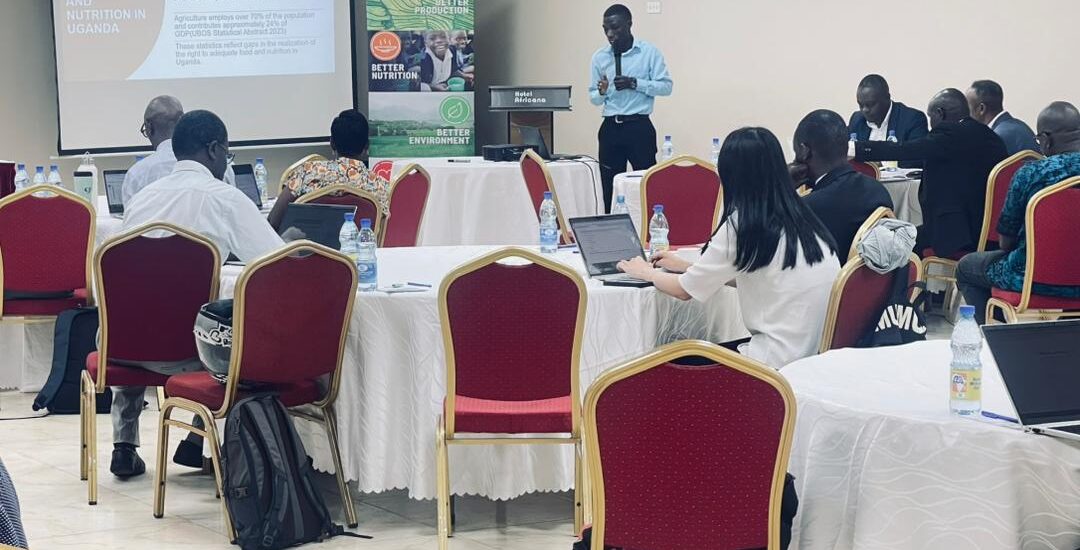
CEFROHT took part in a multisectoral and multi-stakeholder meeting convened by the Ministry of Education and Sports to discuss the Joint School Feeding Workplan and budget for Uganda. The engagement brought together representatives from government ministries, development partners, civil society organisations, and other actors working across education, health, agriculture, and nutrition.
The meeting strengthened coordination among stakeholders and ensured that school feeding interventions at the country level are aligned, complementary, and free from duplication. The partners shared ongoing and planned activities and were able to map out priority areas, clarify roles, and identify opportunities for collaboration. This helps to improve efficiency in resource use while reinforcing collective impact across the school feeding ecosystem.
CEFROHT presented its school feeding workplan for the year, outlining priority areas focused on policy and legal advocacy for policies and laws that support hybrid school feeding models, which prioritize the orphaned and vulnerable children in Uganda. In addition, CEFROHT urged the government to prioritize the finalisation of the School Canteen Guidelines, development of the School Feeding By-Law, and measures aimed at restricting the marketing of unhealthy foods to children in and around schools.
The discussion was grounded in Uganda’s broader nutrition and education context. According to the Uganda Demographic and Health Survey (UDHS 2022), 29% of children under five are stunted, reflecting chronic malnutrition that often continues to affect children as they grow into school age. In addition, findings from the World Food Programme (WFP) and national school feeding assessments indicate that a large proportion of learners in public schools, particularly in rural and low-income settings, attend school without having eaten a meal, emphasising persistent gaps in access to adequate nutrition during the school day.
The meeting provided an important platform for aligning national efforts, avoiding duplication, and ensuring that different actors’ contributions reinforce one another rather than operate in isolation. It also highlighted the need for sustained multisectoral coordination to effectively address school feeding as a shared responsibility across sectors.
CEFROHT will continue to engage within this coordinated framework, contributing to policy and legal processes, and ensuring that collective efforts translate into practical improvements in children’s access to safe, nutritious food within school environments.