
Greenwashing Campaign
The Greenwashing Campaign is a strategic advocacy and public education initiative designed to expose misleading environmental and nutritional claims that undermine efforts to promote healthy diets through robust regulatory frameworks and effective implementation systems. In an era where consumers and policymakers increasingly demand sustainability and health-conscious food systems, industries often exploit these values by labelling their products as “green,” “organic,” “natural,” or “healthy” without adhering to verifiable standards or regulatory oversight.
This campaign targets deceptive marketing tactics that mislead the public into believing ultra-processed or industrially produced foods are healthy and sustainable when, in reality, they may harm both human health and the environment. Such unchecked claims distort consumer choices, dilute policy priorities, and stall progress toward nutrition-sensitive food systems. The Greenwashing Campaign advocates for clear, evidence-based regulations governing food labelling, sustainability certifications, and health claims—ensuring they are monitored by appropriate regulatory authorities.
By raising public awareness, empowering consumers, and demanding stronger enforcement mechanisms, this campaign promotes transparency and integrity in the food system. It also highlights the need to prioritize genuinely sustainable approaches, such as agroecology, organic farming, and localized food systems, which contribute to environmental stewardship and nutritional well-being.
Ultimately, the campaign reinforces CEFROHT’s commitment to ensuring public health and sustainability are not compromised by corporate interests but grounded in rights-based, evidence-driven policies that uphold the right to healthy diets for all.
The Problem
Greenwashing poses a serious threat to the realization of healthy diets and undermines the development of enabling regulatory frameworks essential for public health and environmental sustainability. Corporations and institutions market their products or practices as “green,” “natural,” “healthy,” or “sustainable” despite lacking scientific backing or regulatory approval. This deceptive practice misleads consumers, erodes public trust, and allows powerful industries to continue harmful practices while evading accountability.
Nowhere is this more evident than in the food, beverage, and agrochemical industries. These sectors frequently brand synthetic pesticides, ultra-processed foods, and industrial inputs as “safe,” “nutritious,” or “biodegradable,” despite growing scientific evidence of their harm to human health, ecosystems, and long-term food security. For example, multinationals like Coca-Cola, Nestlé, and PepsiCo market plastic-packaged products as “eco-friendly” or “made from recycled materials,” even though less than 10% of global plastic waste is recycled—far less in countries like Uganda due to limited infrastructure and weak enforcement.
Greenwashing distorts food environments by normalizing unhealthy, ultra-processed foods under the guise of sustainability. Consumers are misled into believing they are making responsible choices when purchasing plastic-wrapped snacks labelled “natural” or pesticides marketed as “environmentally friendly”—products that, in reality, contribute to pollution, biodiversity loss, and chronic disease.
In Uganda, the consequences are severe. Microplastics and toxic residues from degraded packaging and agrochemicals infiltrate soils, water systems, and food chains, compromising food quality, harming pollinators, and threatening smallholder farming systems—the backbone of local food production. This undermines efforts to build resilient, agroecological food systems and worsens diet-related health outcomes.
Greenwashing also delays urgent policy reforms by diverting attention from real solutions like agroecology, front-of-pack nutrition labelling, and zero-waste food systems. It weakens evidence-based regulations and hampers their implementation.
To counter this, CEFROHT’s Greenwashing Campaign calls for developing and enforcing clear regulatory standards for health and environmental claims in food and agriculture. We advocate for rigorous monitoring, consumer education, and legal accountability to ensure food systems are guided by truth, science, and human rights—not corporate deception. Only by dismantling greenwashing can we build the regulatory frameworks needed to promote truly healthy diets and protect people and the planet.
Fighting for food justice and land rights?
Join CEFROHT in empowering communities through advocacy and sustainable agriculture.
I had lost all hope after people tried to take my land in Kiboga. But CEFROHT helped me for free and took my case to court. Because of them, I got my land back. I can now farm and take care of my children. I thank CEFROHT so much for standing with me.

-
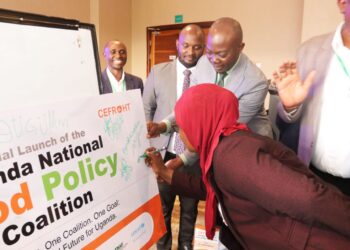
One Voice, One Label: Uganda Launches a Food Policy Coalition to Tell the Truth About Our Food
Why lawyers, farmers’ advocates, consumer groups, students, and journalists have joined forces to put clear warning labels on unhealthy food, and why CEFROHT is in the thick of it. Line up ten packaged snacks on a table. Biscuits, crisps, noodles, a juice or two. How many of them would you guess are too salty to
October 7, 2026 -

Uganda’s Policymakers Commit to Warning Labels on Unhealthy Food
How a single day of dialogue with 70 policymakers and partners moved Uganda closer to clear warnings on foods high in salt, sugar, and fat, and why we will not let the momentum slip. Pick up a packet of biscuits, a soda or a bag of crisps in any Kampala supermarket and turn it over.
October 6, 2026 -

Bringing the Law to the Feast: CEFROHT’s Fight for the Right to Food at Terra Madre 2026
What a Ugandan team of lawyers and food rights advocates carried into the world’s biggest gathering of the Slow Food movement, and what we carried home. “So what exactly does a legal organization do at a food festival?” We heard some version of that question more than once in Turin. It was a fair one.
October 3, 2026 -
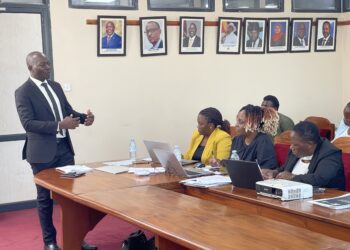
“He Who Controls Seed, Controls You”: Why We Are Asking EALA to Rewrite the EAC Seed Bill
Why CEFROHT told East African lawmakers to rewrite the proposed EAC Seed Bill, or let it go. Ask a farmer in Koboko where her groundnut seed came from and you may get a long answer. From her mother. From a neighbor who swapped it for beans. From a variety the village has been quietly improving,
October 3, 2026