
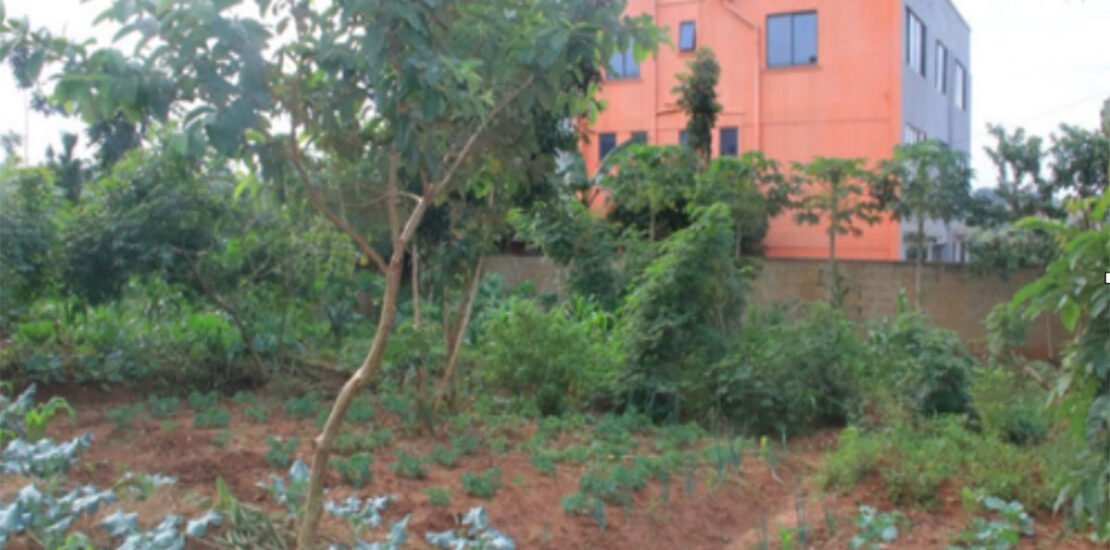
CEFROHT Agroecology Learning Centres
The Center for Food and Adequate Living Rights (CEFROHT) has set up four (4) Community Agroecology Learning Centers in Kiboga, Wakiso, Naggalama, and Mukono districts as part of its larger mission to advance agroecology and the right to adequate food in Uganda. These centers serve as the foundation for enlisting local communities in capacity building in agroecology practices and ecological transformation, and are vibrant community hubs where smallholder farmers, particularly women and youth, learn, experiment, innovate, and share indigenous knowledge on agroecological practices that support food sovereignty, health, biodiversity, and local economies.
CEFROHT carries out action-research with the full participation of smallholder farmers in order to develop context-specific and evidence-based farmer training materials, as well as production and marketing strategies and plans for agroecology products and produce for economic scale-out.
The Agroecology Learning Centers are designed through bottom-up consultations with farmers, community leaders, and local governments. They are established in rural communities and act as practical training grounds for agroecology techniques, innovation spaces for farmer-to-farmer exchange of traditional knowledge and local technologies. They are incubation centers for new ideas on sustainable farming, livelihoods, and eco-enterprise, platforms for legal literacy, where farmers are educated about their rights as rights holders.
Smallholder farmers convene at these centers periodically to take part in policy discussions, field trips, mentorships, trainings, knowledge-sharing forums, and community seed fairs. Farmers gain practical agroecology skills in sustainable vegetable and staple crop production, agroforestry, growing herbs and spices for nutrition and health, managing organic soil fertility, integrated pest management, seed selection for seed sovereignty, and biodiversity conservation through experiential learning and participatory training methods.
Training in animal husbandry and economic diversification through dairy, apiculture, and cash crops including coffee, bananas, and pastures are provided too.
Across the Agroecology learning centers in Kiboga, Mukono, and Wakiso, more than 1,000 smallholder farmers have received training thus far. These farmers are now implementing agroecological practices in their own farms and homesteads, acting as peer trainers and model farmers in rural communities, encouraging other farmers to embrace sustainable practices, taking part in local policy and food governance discussions, and sharing their experiences with development partners, researchers, and policymakers.
Farmers are also learning about their right to land, particularly for women and youth, the impact of trade and seed laws on their farming systems, how to interact with duty bearers, local governments, and policymakers to assert their rights, and their right to adequate food, water, and a clean environment.
The long-term goals include expanding these learning centers to all districts in Uganda, creating mobile and digital learning resources, and connecting agroecology expertise to platforms for policy advocacy, cooperatives, and markets. CEFROHT’s dedication to community-driven agroecology, based on knowledge, rights, and ecological integrity, is demonstrated by the learning center initiative.
CEFROHT is fostering a movement of ecological farmers, citizen agency, and rights-holders through the learning centers, who are planting the seeds of justice, resiliency, and food sovereignty throughout Uganda.
Fighting for food justice and land rights?
Join CEFROHT in empowering communities through advocacy and sustainable agriculture.
I had lost all hope after people tried to take my land in Kiboga. But CEFROHT helped me for free and took my case to court. Because of them, I got my land back. I can now farm and take care of my children. I thank CEFROHT so much for standing with me.

-
Eight Nations, One Raised Hand: East Africa’s Agroecology Bill Takes Its First Big Step
How a conversation that began on a Ugandan farm became a regional law in the making, and why the next twelve months will decide its future. Picture a room full of lawmakers from eight countries. Different languages, different economies, different politics. A motion is read. And every single hand goes up. That happened in Arusha,
October 3, 2026 -
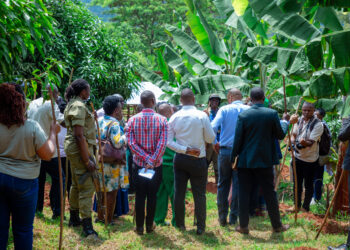
No Podium, Just Soil: Inside CEFROHT’s Four Agroecology Learning Centers
Inside the four farms where Ugandan smallholders teach each other, and where regional lawmakers came to learn. For more than a thousand Ugandan smallholder farmers, the answer has no walls, no whiteboard, and no podium. It has compost heaps, beehives in the trees, a seed bank on a shelf, and a neighbor showing you how
October 3, 2026 -

Another World Is Possible: Taking Africa’s Agroecology Story to the World Social Forum.
At the World Social Forum in Benin, the global movement for agroecology met, argued, and planned. CEFROHT was in the room. What happens when thousands of farmers, activists, lawyers, faith leaders and young people from across the world descend on one West African city with a single stubborn belief? You get the World Social Forum.
October 3, 2026 -

X space on the EAC Agroecology Law Sparks Urgent Regional Debate
A recent X space dialogue titled, “Harvest for Hope: The EAC Agroecology law is almost here” brought together the region’s sharpest minds, agroecology experts, CSOs, legal practitioners, and policymakers to unpack what is at stake and what should be done. The discussions laid bare the cost of inaction. Chemical-intensive agricultural practices are degrading soils at
May 2, 2026