
No Podium, Just Soil: Inside CEFROHT’s Four Agroecology Learning Centers
- October 3, 2026
- Posted by: Cefroht Manager
- Categories: Agroecology, Publications
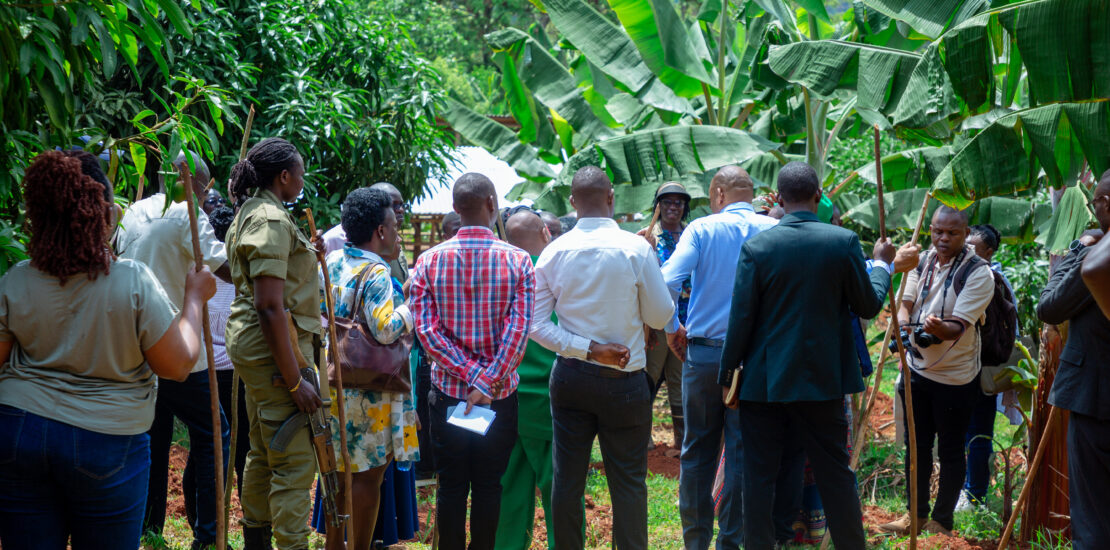
Inside the four farms where Ugandan smallholders teach each other, and where regional lawmakers came to learn.
For more than a thousand Ugandan smallholder farmers, the answer has no walls, no whiteboard, and no podium. It has compost heaps, beehives in the trees, a seed bank on a shelf, and a neighbor showing you how she keeps pests off her tomatoes without a single drop of chemical spray.
These are CEFROHT’s four Agroecology Learning Centers, in Kiboga, Wakiso, Naggalama and Mukono. Each one was shaped through conversations with farmers, local leaders and district officials, and each one does several jobs at once. A demonstration farm. A meeting point for swapping know-how. A starting line for small eco enterprises. Above all, a place where women and young people in particular come to learn by doing.
Almost nothing here is taught from a podium. Farmers learn in the field, then carry what works home to their own land.
Four farms, four personalities
In Kiboga, the bees are in charge. Sixty-five hives hang in the trees, ready for colonies, served by a double-layered bee house that can hold about sixty more. Around them, coffee and cocoa share the ground with bananas, cinnamon, beans, spinach, dodo, and indigenous fruit trees such as jackfruit, avocado, and mango. Two acres of coffee and cocoa are already at harvest, with more being planted, and a community seed bank and herbal garden are on the way.
In Wakiso, the treasure is the seed bank. Multicolored maize, pumpkin, passion fruit, beans, pigeon pea, banana suckers and cassava cuttings, all indigenous or locally adapted, are kept safe so that farmers never have to depend on someone else to plant their next season. Young people come here for training, mentorship and internships, and farmers, researchers and policymakers gather here to argue about food policy, as they should.
In Naggalama, nothing is wasted. This is a social enterprise built around agroecological dairy. Cow dung becomes compost, compost becomes pasture, pasture becomes milk, and a biogas system is on its way to turn waste into clean energy. Women farmers produce and sell pure agroecological milk, and visitors come to see the loop working.
And in Mukono, at the Nansubuga CEFROHT Learning Centre, everything comes together: intercropping, organic pest control, soil and water conservation, seed saving, livestock, beekeeping, and high-value crops like cinnamon and plantain that put real money into household pockets.
The day the lawmakers came
Here is where our story becomes unusual. Most farms teach farmers. Ours also teach legislators.
Members of the East African Legislative Assembly once walked the Mukono farm as part of a regional learning engagement on agroecology. They saw intercropping with their own eyes. They asked farmers hard questions. Agroecology stopped being a policy concept and became something they could touch.
Before they left, they committed to initiate a regional Agroecology Bill, with CEFROHT providing technical support. That commitment has since become the EAC Agroecology Bill, 2026, which the Assembly unanimously allowed to be introduced in April this year. A law that began, quite literally, in a farmer’s field.
This is the CEFROHT way, and we are proud of it. We build the evidence in the soil, then we carry it into parliaments and courtrooms. Practice feeds policy. Policy protects practice.
Four is a beginning
More than a thousand farmers have trained with us so far, and many now teach their neighbors and speak up in local food governance. But four centers are not enough for a country this size. Our dream is a learning center in every district of Uganda.
Want to see it for yourself? Come and visit, sponsor a center, support a seed bank, or partner with us to plant the next one. Write to us at info@cefroht.org.