
Eight Nations, One Raised Hand: East Africa’s Agroecology Bill Takes Its First Big Step
- October 3, 2026
- Posted by: Cefroht Manager
- Category: Agroecology
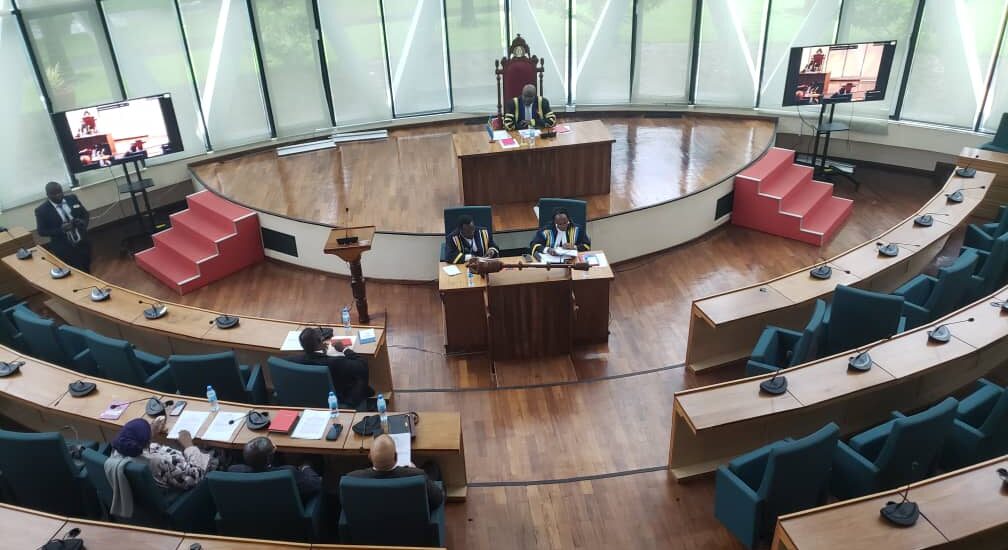
How a conversation that began on a Ugandan farm became a regional law in the making, and why the next twelve months will decide its future.
Picture a room full of lawmakers from eight countries. Different languages, different economies, different politics. A motion is read. And every single hand goes up.
That happened in Arusha, Tanzania, on 13th April 2026, when the East African Legislative Assembly (EALA) unanimously granted leave to introduce the East African Community Agroecology Bill, 2026. In a region more used to arguing about borders, the lawmakers found something they could all agree on. It turned out to be soil.
People who were not in that room might call it a surprise. We would call it a harvest.
Where it really started
Years before Arusha, CEFROHT sat down with EALA’s Committee on Agriculture, Tourism and Natural Resources with what was, at the time, just a pitch. Then came the corridor meetings, the capacity-building sessions, and the farm visits where legislators stood in our learning center in Mukono and saw agroecology working with their own eyes. We captured that journey in a documentary we called “The Harvest of Hope.” The name was a bet. The vote in Arusha suggests we won it.
We do not wait for change. We build it, law by law, farm by farm, conversation by conversation.
So what does the Bill actually do?
Something surprisingly simple. It gives legal weight to what millions of East African farmers, pastoralists and fisherfolk already do every day: farming that works with nature instead of against it. Compost instead of chemical fertilizer. Mixed crops instead of a single crop stretching to the horizon. Community seed banks instead of dependence on imported, patented seed. Until now, none of this had real protection in regional law.
Hon. Gideon Gatpan Thoar, who chairs the committee and moved the Bill, put it plainly: “We want to promote practices that are consistent with our cultures and traditions while integrating them with science.”
Notice what the Bill does not do. It bans nothing. Instead, it builds choice and support for the farmers industrial agriculture has left behind, especially women, young people, and smallholders. It protects farmer-managed seed systems, restricts highly hazardous agrochemicals, and recognizes Participatory Guarantee Systems, which let small farmers prove their produce is agroecological through community trust rather than costly certification. And quietly, radically, it treats pastoralists and fisherfolk as full partners rather than footnotes.
Is it brave? Hon. Thoar did not pretend otherwise: “There is a big fight from conventional agriculture. Big corporations are sponsoring data; they have a lot of money.” We know that fight well. We think the Bill is worth it.
Why this cannot wait
East Africa is losing its topsoil, with some estimates putting land degradation as high as 25 percent. Seeds that communities have nurtured for generations are being patented by companies that never planted them. Climate shocks have stopped being the exception. Against that backdrop, a regional law protecting ecological farming is no longer an idealistic ask. It is common sense.
It is also a shared victory. In Arusha, the Speaker publicly recognized more than thirty organizations that helped shape the Bill, from the Alliance for Food Sovereignty in Africa to PELUM Uganda, Greenpeace and SWISSAID. Lawmakers, scientists, civil society and farmers wrote this together.
The clock is ticking
Granting leave was the opening act. The Bill now moves through technical review, drafting, public consultation and a First Reading before it can be debated and passed, and the current Assembly’s term ends in late 2027. If it passes, East Africa could hold one of the most progressive regional agroecology laws anywhere in the world.
For farmers who have practiced these methods quietly for generations, it would be recognition long overdue that the answers to tomorrow’s food crisis are already growing in today’s fields.
The Bill still has to pass, then be implemented, then be replicated. CEFROHT will be there at every step, as we have been from the first conversation. If you bring resources, expertise, networks or simply the belief that food systems can be just, we would love to hear from you at info@cefroht.org.