
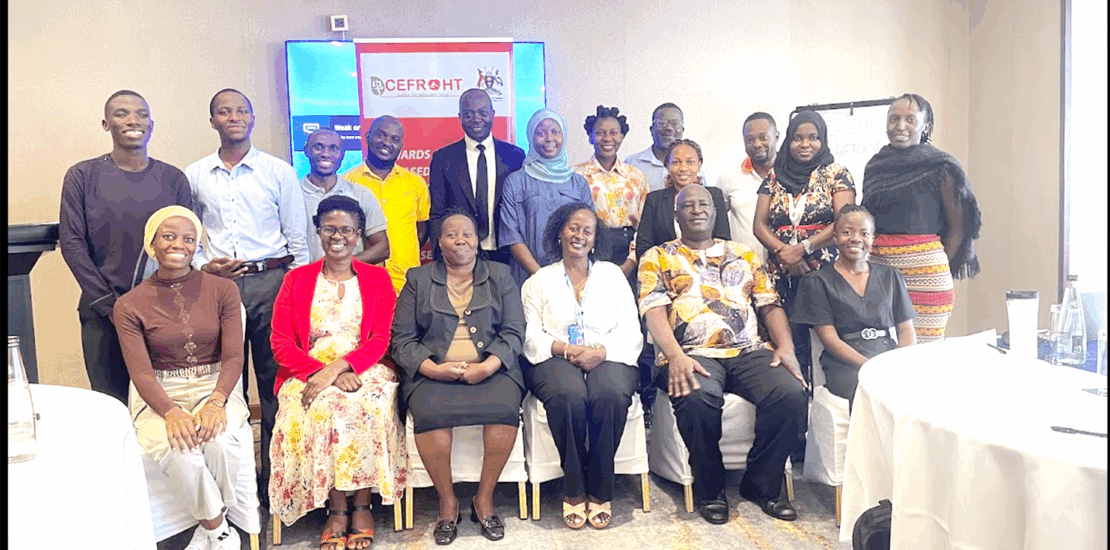
FAQs on Advocacy Campaigns and Partnerships Program
The Advocacy Campaigns and Partnerships Program at the Centre for Food and Adequate Living Rights (CEFROHT) drives systemic change through human rights-based advocacy, legal reforms, and strategic partnerships. Focused on food safety, environmental justice, and health rights, the program empowers communities, engages policymakers, and builds coalitions for sustainable impact. Below are answers to common questions about our approach, partnerships, and ongoing initiatives.
The program advances the right to adequate food, health, and environmental justice through advocacy, legal reform, policy engagement, and coalition building. Key focus areas include food safety, breastfeeding, agrochemicals, school feeding, and seed sovereignty.
We use a Human Rights-Based Approach (HRBA), emphasizing participation, accountability, empowerment, and the rule of law to ensure systemic change and community-centered solutions.
We collaborate with:
- Media practitioners (trained in rights-based journalism)
- Judges & magistrates (trained on human rights enforcement)
- Lawyers (under the Uganda Law Society Food and Nutrition Cluster)
- University students (via Food and Law Clubs)
- Local communities & leaders (through dialogues)
- Government ministries & CSOs (via technical working groups and coalitions).
For more details contact [email/phone].
We partner with ministries (Health, Education, Trade, Justice) and agencies like the Uganda Human Rights Commission and UNBS, contributing to policies such as the Food and Nutrition Bill and Consumer Protection Bill.
Key campaigns include:
- Food Safety
- Breastfeeding
- Seed Sovereignty
- School Feeding
- Agrochemicals & Agricultural Inputs
- Greenwashing
- Environmental Justice
- Policy & Legal Reform
Coalitions amplify advocacy impact by uniting CSOs and stakeholders, preventing silos, and strengthening policy influence at national and regional levels.
Yes! We collaborate with UNICEF, WHO, FAO, and regional partners like KELIN, Natural Justice (Kenya), and the East African Legislative Assembly.
Absolutely! Students join Food and Law Clubs, internships, and advocacy initiatives in legal research, seminars, and community outreach.
Contact us via our website or email to explore collaborations in research, policy advocacy, or community outreach.
We’ve trained media, legal professionals, and students; influenced national policies; empowered communities; and built coalitions driving reforms in Uganda and East Africa.
Fighting for food justice and land rights?
Join CEFROHT in empowering communities through advocacy and sustainable agriculture.
I had lost all hope after people tried to take my land in Kiboga. But CEFROHT helped me for free and took my case to court. Because of them, I got my land back. I can now farm and take care of my children. I thank CEFROHT so much for standing with me.

-
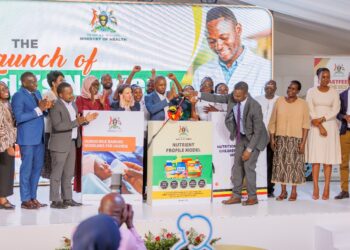
NPM Launched: A Milestone, Not a Finish Line
Uganda’s Nutrient Profile Model (NPM) was signed on 9 February 2026 and launched on 12 August 2026 — marking an important milestone in the country’s efforts to create healthier food environments. The NPM was officially presented to the public through a media briefing on 11 August and formally launched on 12 August at Mulago School
August 14, 2026 -
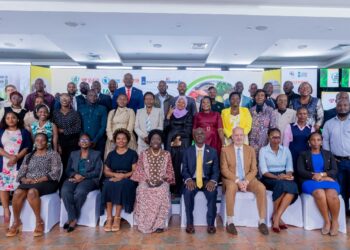
Engaging Parliament on the Right to Food
As Uganda’s 12th Parliament begins its five-year term, CEFROHT is working alongside the Uganda Parliamentary Alliance on Food and Nutrition Security (UPA-FNS) to ensure food and nutrition remain firmly on the legislative agenda. On 11th and 12th August 2026, CEFROHT participated in a two-day orientation for 200 Members of Parliament at Imperial Royale Hotel in Kampala, using
August 13, 2026 -

A National Petition for Evidence-Based Front-of-Pack Warning Labels Reaches Local Communities in Busoga and Bunyoro
CEFROHT and the Uganda National Food Policy Coalition are taking the call for mandatory Front-of-Pack Warning Labelling (FOPWL) to communities across Uganda through a national citizens’ petition calling on the Ministry of Health, the Ministry of Justice and Constitutional Affairs, and Cabinet to enact regulations requiring mandatory clear warning labels on foods and beverages high
June 28, 2026 -
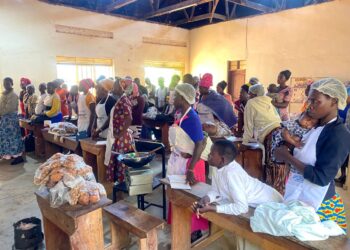
Nutrition Week Takes the Agenda to Busoga
From 22 to 26 June 2026, CEFROHT, the Uganda Parliamentary Alliance on Nutrition and Food Security and partners took Parliamentary Nutrition Week to the Busoga sub-region, placing children’s nutrition, unhealthy food environments and the need for stronger government action at the centre of the conversation. Uganda is facing different forms of malnutrition at the same
June 28, 2026