
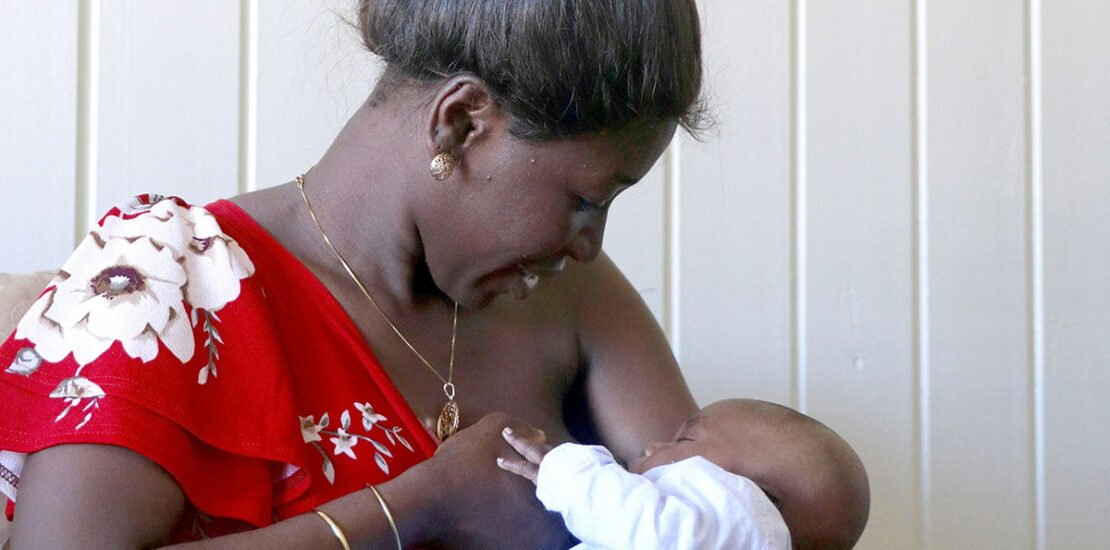
Breastfeeding Campaign
As part of its unwavering commitment to promoting the right to health and adequate nutrition, CEFROHT is launching a Breastfeeding Campaign aimed at promoting, protecting, and supporting breastfeeding as a vital strategy for maternal and child health, food security, and the prevention of Non-Communicable Diseases (NCDs). Using a Human Rights-Based Approach, the campaign focuses on legal and policy reforms, shifting social norms, creating supportive workplace environments, and empowering communities to uphold breastfeeding as a shared responsibility.
Breastfeeding is a powerful, low-cost intervention that delivers essential nutrients for infants, boosts their immune systems, and significantly reduces the risk of childhood stunting, obesity, and long-term health issues, including NCDs. For mothers, it improves health outcomes and contributes to economic resilience by reducing healthcare costs and supporting household food security. Through this campaign, CEFROHT advocates to strengthen and amplify the importance of breastfeeding—not only as a health practice but also as a fundamental human right that supports dignity, equality, and sustainable development.
The Problem
Breastfeeding is widely acknowledged as a cornerstone of child survival, nutrition, and maternal health. The World Health Organization (WHO) recommends exclusive breastfeeding for the first six months of life, followed by continued breastfeeding along with appropriate complementary foods up to two years and beyond. Breastfeeding significantly reduces infant morbidity and mortality, strengthens the immune system, and fosters optimal cognitive development. For mothers, it lowers the risk of breast and ovarian cancer, helps space births, and improves postpartum recovery.
Despite these widely acknowledged benefits, breastfeeding remains under-supported, particularly in rural and underserved communities in Uganda. According to the Uganda Demographic and Health Survey (UDHS 2022), only 66% of infants under six months are exclusively breastfed. This figure sharply declines in food-insecure households and among working mothers. Many women stop breastfeeding early due to poverty, stigma, poor maternal nutrition, lack of awareness, unsupportive work environments, and inadequate institutional support.
In the informal and agricultural sectors, which employ the vast majority of rural Ugandan women, there is no protection, infrastructure, or framework for breastfeeding. These women are often forced to return to farm work or market activities just days after childbirth, without access to proper nutrition, rest, or privacy. Consequently, breastfeeding is compromised—not due to a lack of will but due to structural neglect.
Moreover, Uganda’s legal and policy frameworks offer limited and uneven protection for breastfeeding mothers. While Section 56 of Uganda’s Employment Act (2006) provides for one hour of breastfeeding time for women in formal employment, this applies only to a minority of female employees. Since there is no systematic enforcement, most women in the informal economy remain unprotected. Furthermore, the right to breastfeed is often framed only as a maternal duty, rather than a shared public responsibility or a fundamental human right for children to be breastfed. This weakens the dignity and autonomy of mothers and leaves breastfeeding vulnerable to commercial and social pressures.
At the same time, the critical link between nutrition, food systems, and lactation remains overlooked in public health interventions. Maternal undernutrition is a major cause of poor milk production and early termination of breastfeeding. Many rural women lack access to iron-rich foods, proteins, and indigenous crops that support lactation. The growing use of chemical inputs, monoculture, and land degradation further reduces the diversity and safety of locally available food.
However, agroecological farming practices—which rely on biodiversity, organic inputs, and traditional knowledge—can serve as powerful enablers of maternal and infant health. These systems offer safe and nutritious crops like pumpkins, moringa, millet, and legumes, which can enhance both maternal nutrition and milk production. Yet, no structured program in Uganda currently links agroecology with breastfeeding promotion.
In parallel, there is a gap in rights-based and justice-oriented approaches to breastfeeding support. Civil society and legal institutions have often treated breastfeeding as a health sector issue, separate from broader struggles for gender equity, food sovereignty, and environmental justice. What is missing is an integrated framework that positions breastfeeding as a justice issue, demanding social investments, legal safeguards, and food system reform. This approach would empower mothers not only to breastfeed but to do so with dignity—with access to nutritious food, safe spaces, and legal redress when their rights are violated.
Legal and Policy Advocacy
CEFROHT is leading a high-level legal and constitutional advocacy campaign to ensure that national laws protect and enable breastfeeding. A major focus has been the amendment of Section 56 of Uganda’s Employment Act, which inadequately supports working mothers. The law fails to provide for breastfeeding breaks, lactation spaces, or extended maternity leave, undermining women’s rights to equality, work, and health.
To address this, CEFROHT filed a constitutional petition in the Constitutional Court, challenging Section 56 and arguing that the law is discriminatory and inconsistent with Uganda’s Constitution and international human rights obligations. The campaign is grounded in instruments such as:
- The Convention on the Rights of the Child (CRC)
- The Convention on the Elimination of All Forms of Discrimination Against Women (CEDAW)
These call for strong protections for breastfeeding mothers.
Additionally, CEFROHT supports the full implementation of the International Code of Marketing of Breast-milk Substitutes, working to curb the aggressive and misleading promotion of infant formula, which undermines breastfeeding.
Institutional Practice and Leadership
To lead by example, CEFROHT has established a breastfeeding room at its offices, providing a safe, private, and hygienic space for staff and visitors who are nursing mothers. This institutional commitment reflects our belief that all workplaces—regardless of size—can take concrete steps to support women’s rights and infant health.
Through this model, we demonstrate the feasibility and impact of breastfeeding-friendly workplaces and advocate for similar practices across public and private sectors. We emphasize breastfeeding as not just a health recommendation but a human right and empower communities to demand safe, supportive environments for all mothers.
Youth and Academic Engagement
Through our Food and Law Clubs at Makerere University and other institutions, we promote breastfeeding awareness among youth and law students. These clubs host debates, moot court competitions, and public lectures exploring breastfeeding as a legal, social, and health justice issue. This engagement ensures that the next generation of lawyers, policymakers, and health advocates prioritize breastfeeding in their professional practice.
UNICEF Collaboration
As part of our partnership with UNICEF, CEFROHT integrates breastfeeding promotion into wider advocacy on Maternal, Infant, and Young Child Nutrition (MIYCN). We contribute to policy processes such as the National Food and Nutrition Bill, which includes provisions on breastfeeding rights and workplace support, and engage in the national rollout of nutrition standards that advance breastfeeding-friendly health systems and workplaces.
Fighting for food justice and land rights?
Join CEFROHT in empowering communities through advocacy and sustainable agriculture.
I had lost all hope after people tried to take my land in Kiboga. But CEFROHT helped me for free and took my case to court. Because of them, I got my land back. I can now farm and take care of my children. I thank CEFROHT so much for standing with me.

-
NPM Launched: A Milestone, Not a Finish Line
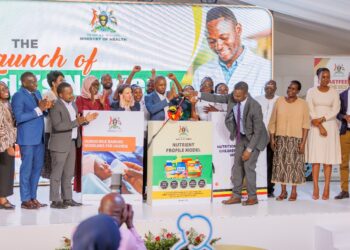
Uganda’s Nutrient Profile Model (NPM) was signed on 9 February 2026 and launched on 12 August 2026 — marking an important milestone in the country’s efforts to create healthier food environments. The NPM was officially presented to the public through a media briefing on 11 August and formally launched on 12 August at Mulago School
August 14, 2026 -
Engaging Parliament on the Right to Food
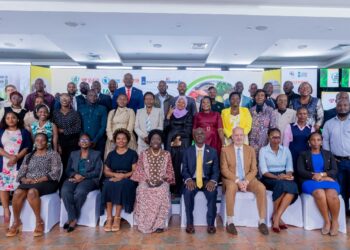
As Uganda’s 12th Parliament begins its five-year term, CEFROHT is working alongside the Uganda Parliamentary Alliance on Food and Nutrition Security (UPA-FNS) to ensure food and nutrition remain firmly on the legislative agenda. On 11th and 12th August 2026, CEFROHT participated in a two-day orientation for 200 Members of Parliament at Imperial Royale Hotel in Kampala, using
August 13, 2026 -

A National Petition for Evidence-Based Front-of-Pack Warning Labels Reaches Local Communities in Busoga and Bunyoro
CEFROHT and the Uganda National Food Policy Coalition are taking the call for mandatory Front-of-Pack Warning Labelling (FOPWL) to communities across Uganda through a national citizens’ petition calling on the Ministry of Health, the Ministry of Justice and Constitutional Affairs, and Cabinet to enact regulations requiring mandatory clear warning labels on foods and beverages high
June 28, 2026 -
Nutrition Week Takes the Agenda to Busoga
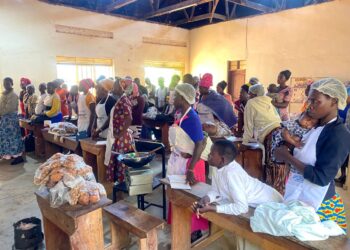
From 22 to 26 June 2026, CEFROHT, the Uganda Parliamentary Alliance on Nutrition and Food Security and partners took Parliamentary Nutrition Week to the Busoga sub-region, placing children’s nutrition, unhealthy food environments and the need for stronger government action at the centre of the conversation. Uganda is facing different forms of malnutrition at the same
June 28, 2026