
Bringing the Law to the Feast: CEFROHT’s Fight for the Right to Food at Terra Madre 2026
- October 3, 2026
- Posted by: Cefroht Manager
- Category: Advocacy
What a Ugandan team of lawyers and food rights advocates carried into the world’s biggest gathering of the Slow Food movement, and what we carried home.
“So what exactly does a legal organization do at a food festival?”
We heard some version of that question more than once in Turin. It was a fair one. Terra Madre Salone del Gusto fills the old squares of the city with heirloom grains, mountain cheeses, smoked fish, spices, and the people who make them: more than 600 producers and Slow Food communities from every corner of the world. It is a place for farmers and cooks. We are lawyers and food rights advocates.
By the fourth day, nobody was asking anymore.
Here is what we told them. You can grow the most beautiful food on earth, and it will mean very little if the law allows someone else to own your seed, poison your soil, or decide what lands on your child’s plate. Food is culture. Food is also power. And in the end, power answers to law.
A seat on the stage
This year the whole event was built around one idea: biodiversity, not only of seeds and breeds but of cultures and the knowledge held by the people who grow food. That is the ground CEFROHT stands on every day in Uganda and across East Africa.
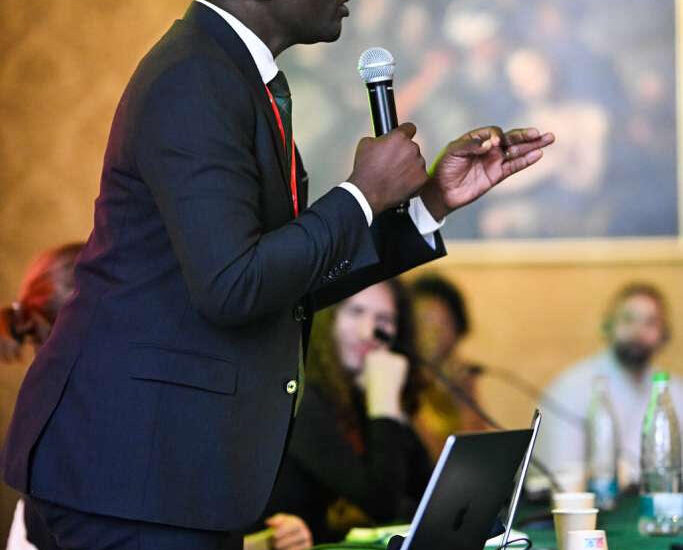
At “The Taste of Power. The Justice of Food,” we presented our work on the East African Community Agroecology Bill, the EAC Seed Bill and the Agroecology Legal Network for Africa (ALENAF). The next day, our Executive Director, Dr. David Kabanda, sat on the panel “Food Justice Is Social Justice” alongside voices from Wageningen University, the Bolivian Amazon, Brazil and Canada. While the room explored how hunger is shaped by gender, class and colonial history, Dr. Kabanda brought it home: a Ugandan court affirming that the right to food can be enforced, and a growing network of agroecology lawyers stretching across the continent.
Leading the whole movement from the front was Edward Mukiibi, a fellow Ugandan and President of Slow Food. Some days it genuinely felt as though Uganda had quietly taken charge of the conversation. We were not complaining.
Most people at Terra Madre were working on what we grow. Very few were working on the rules that decide who gets to grow it. That is exactly where people leaned in.
The conversation that stayed with us
On the final day, Sofía Monsalve Suárez, the United Nations Special Rapporteur on the Right to Food, spoke at the Conference on Land and Peace about how hunger and conflict feed each other, and how only the right to food, care for the land, and fairness can break that cycle. Afterwards we sat down with her to talk about our work. Her office committed to working closely with CEFROHT as we push for the right to food in Uganda and the wider region.
For an organization that has spent years arguing that the right to food belongs in courtrooms and parliaments, that is not a small thing. It means the work happening in Kampala and Arusha now has a friend at the highest level of the UN human rights system.
Then a journalist from a prominent Mexican media house asked Dr. Kabanda for an interview. His question was simple: could what CEFROHT is doing in Africa work in South America? We think it can. We told him so.
Africa is organizing, and we are in the room
We were there when the Slow Food Youth Network met for the very first time as SFYN Africa. We took part in the African delegates’ meetings and in electing Slow Food’s new international leadership. And we began working towards a formal partnership with AYUUB NGO, the youth-led organization behind Slow Food Somalia, to advance agroecology across East Africa together.
What we brought home
Stories move people faster than statistics, so you will be hearing many more of them from the farmers and communities we stand with. Food justice cannot be separated from gender, land and youth, and our work on all three will grow. And the global movement is talking on Instagram, so we are going to show up there properly.
So, what does a legal organization do at a food festival? It reminds the world that behind every plate there is a law, and that the law can be made fair.
If you believe that too, walk with us. Follow @cefrohtug on Instagram, write to us at info@cefroht.org, or partner with us as we turn the energy of Turin into real change at home.