
“He Who Controls Seed, Controls You”: Why We Are Asking EALA to Rewrite the EAC Seed Bill
- October 3, 2026
- Posted by: Cefroht Manager
- Category: Advocacy
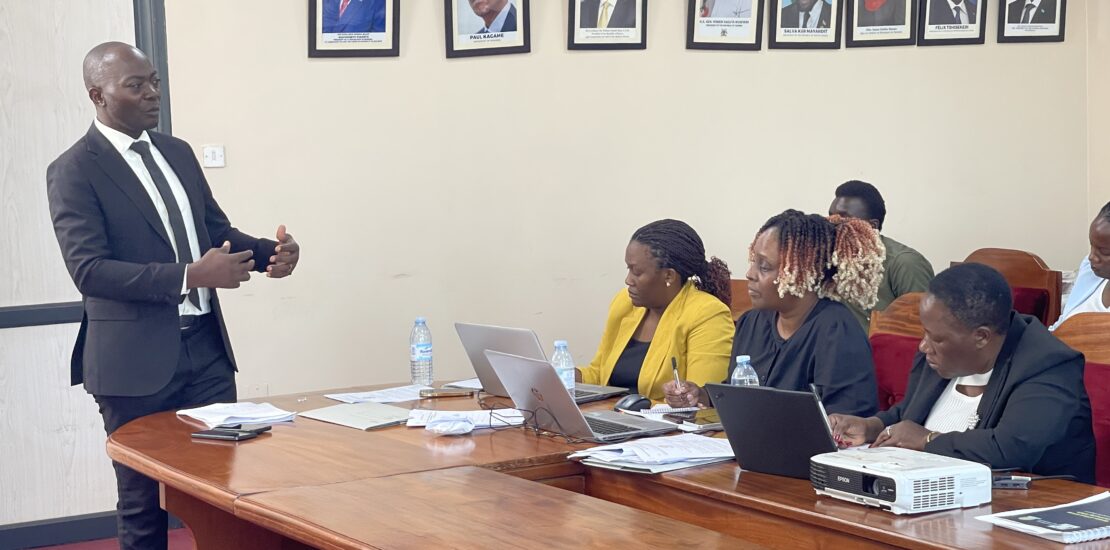
Why CEFROHT told East African lawmakers to rewrite the proposed EAC Seed Bill, or let it go.
Ask a farmer in Koboko where her groundnut seed came from and you may get a long answer. From her mother. From a neighbor who swapped it for beans. From a variety the village has been quietly improving, season after season, for longer than anyone remembers.
Now ask the proposed East African Community Seed and Plant Varieties Bill, 2025, where that seed fits in.
It has no answer. And that is exactly the problem.
We said it out loud
At public hearings held at the Ministry of East African Community Affairs in Kampala for civil society and farmers, our Executive Director, Dr. David Kabanda, presented CEFROHT’s memorandum on the Bill. Our position was not subtle. Overhaul it completely, or withdraw it.
Why so firm? Because the Bill treats seed as just another product to be harmonized for cross-border trade. In Africa, seed is not just a product. It is culture, livelihood, and survival. With staples like maize feeding millions of East Africans, many of them schoolchildren, handing control of seed to a few corporations would place smallholders in a kind of quiet servitude.
“He who controls seed, controls you.” – Dr. David Kabanda, Executive Director, CEFROHT
What the Bill gets wrong
Global seed markets are already concentrated in the hands of a handful of multinational companies. A smallholder cannot set the price of seed. She cannot hold a breeder accountable when a crop fails. And under this draft, she would have even less say.
The Bill is almost completely silent on farmer-managed seed systems, community seed banks and indigenous varieties. That silence is dangerous. In open African gardens, commercial hybrids cross-pollinate with local varieties, and over a few seasons the traditional ones can disappear. Farmers then find themselves locked into buying new seed every single planting season. The age-old practice of saving, multiplying and sharing seed, the very practice that gave Koboko its groundnut, risks being restricted or pushed out altogether.
National laws in Uganda, Kenya and Tanzania at least carve out space for farmers. The regional draft legislates almost entirely for industrial seed companies and commercial hybrids.
There is a quieter trap too. Key decisions on certification, valuation and breeders’ rights would be left to ministerial regulations written after the Bill is passed. Those regulations skip the public participation that primary legislation requires. In plain words, farmers and civil society would be locked out of the room where the real rules get made.
The Bill also sits uneasily with commitments East African states have already made, including Article 9 of the International Treaty on Plant Genetic Resources for Food and Agriculture, Articles 20 and 21 of the African Charter on Human and Peoples’ Rights, and the African Union Model Law on Seed.
What we are asking for
Clear exclusion clauses that protect indigenous varieties, household breeding, seed saving and informal local trade. Guaranteed voting seats for smallholder farmers and farmer federations on the proposed Community Seed and Plant Variety Committee. Breeder obligations and certification rules written into the Act itself, where the public can see and debate them. And no costly duplication between regional and national seed authorities.
None of this is anti-trade. It is pro farmer. We believe East Africa can have a modern seed sector without sacrificing the seed systems that have fed this region for centuries.
This is a fight about who will own the next harvest, and it is far from over. Stand with East Africa’s farmers. Share this story, support our seed sovereignty work, or partner with us at info@cefroht.org.