
The Smallest Farmer on Your Payroll: Why Bees Hold the Key to Agroecology and Our Food
- October 3, 2026
- Posted by: Cefroht Manager
- Category: Advocacy
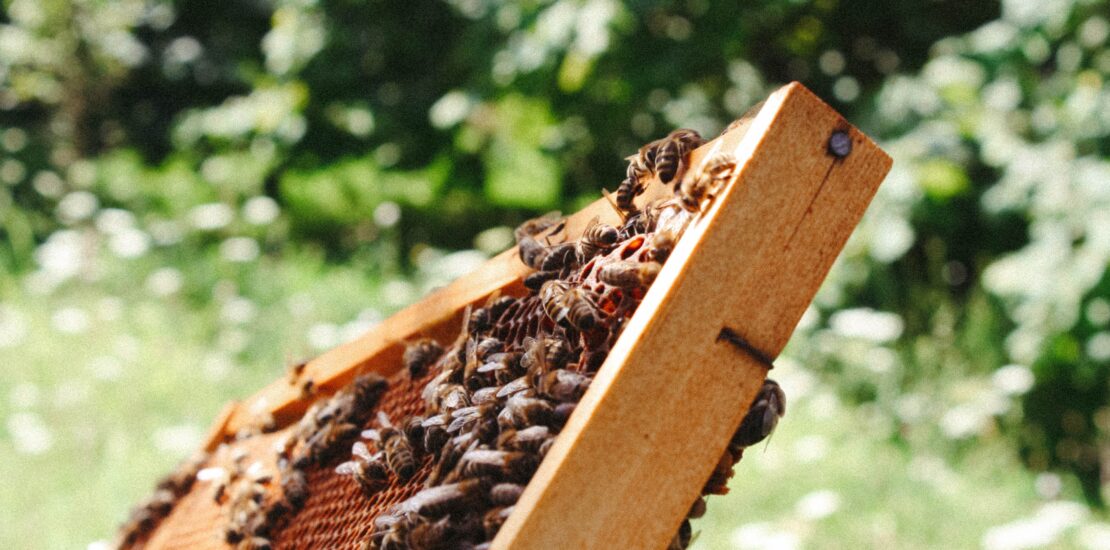
Bees decide far more of what lands on your plate than you think. Here is why we are fighting for them.
When did you last thank a bee?
Probably never. Nobody does. A bee drifts across a garden, settles on a flower for a moment, and lifts off again. It is one of the most ordinary sights in the world. Yet the coffee in your morning cup, the mango in your child’s lunch box, and the beans in tonight’s supper may all exist because, somewhere along the way, a bee carried pollen from one flower to the next.
We notice the harvest. We rarely notice the workers who made it possible.
The numbers nobody puts on the label
According to the Food and Agriculture Organization (FAO), about three out of four of the world’s food crops that produce fruits and seeds rely at least partly on pollinators. Pollinators stand behind roughly a third of the food we harvest and improve the yields of 87 percent of the world’s leading crops. Here is the part that should make us sit up: the crops that lean hardest on bees are the fruits, vegetables, nuts and seeds that carry the vitamins our staple grains cannot. Bees do not simply keep us fed. They keep us nourished.
So when pollinators decline, and they are declining, it should worry all of us. Recent modelling of a full collapse points to crop prices rising by about a third and global losses near 729 billion US dollars. The heaviest burden would fall on the households already struggling to put good food on the table.
A landscape that has driven out its bees does not announce it. It simply waits for the yields to fall.
The uncomfortable truth
Here is our honest opinion. The way much of the world has chosen to farm is driving the problem. Endless fields of a single crop, stripped of hedgerows and flowers and drenched in chemicals, offer bees nothing to eat and nowhere to live. Highly hazardous pesticides, many already banned in the very countries that still export them, poison the pollinators those crops depend on. We built a farming model for quick output and quietly undermined the thing that makes output possible.
Agroecology turns that around. It treats a farm as a living system rather than a machine to be fed with purchased inputs. Diverse crops, flowering hedges and trees keep bees fed through the seasons, and the bees keep that diversity alive. In one documented case, old fruit and nut trees tripled their harvests once hives were placed nearby. Protecting pollinators is not a cost to productive farming. It is one of its foundations.
What it looks like on the ground
Walk through our learning center in Kiboga, and you will find sixty-five beehives hanging in the trees among coffee, cocoa, bananas and indigenous fruit trees, with a sheltered bee house built to hold about sixty more. In Wakiso and Mukono, hives sit beside vegetable gardens and seed banks. This is deliberate. Beekeeping brings honey, wax, propolis and pollen into the household, pollinates neighboring fields, and can begin with a few hives and local materials. It is one of the few livelihoods truly within reach of families with very little.
Uganda already has well over a million beekeepers, coordinated by the Uganda National Apiculture Development Organization (TUNADO). But long dry seasons, deforestation and the spread of chemical-heavy farming threaten them all. That is why CEFROHT’s work reaches beyond the hive: defending farmers’ rights to their own seed, campaigning against dangerous imported pesticides, and writing agroecology into local, national and regional law. Every one of those efforts protects bees, and the families who depend on them.
None of this is as glamorous as a full honey harvest. It is slow, patient work. But the loss of pollinators is a debt that compounds quietly, and we all pay it eventually, in higher prices, poorer diets and thinner harvests.
So the next time a bee drifts past, consider it a colleague. Then help us protect it. Visit one of our learning centers, support our campaign against highly hazardous pesticides, or partner with us at info@cefroht.org.