
Uganda Finally Has a Measuring Stick for Unhealthy Food: The Nutrient Profile Model Is Launched
- August 14, 2026
- Posted by: Benjamin Wamala
- Category: Advocacy
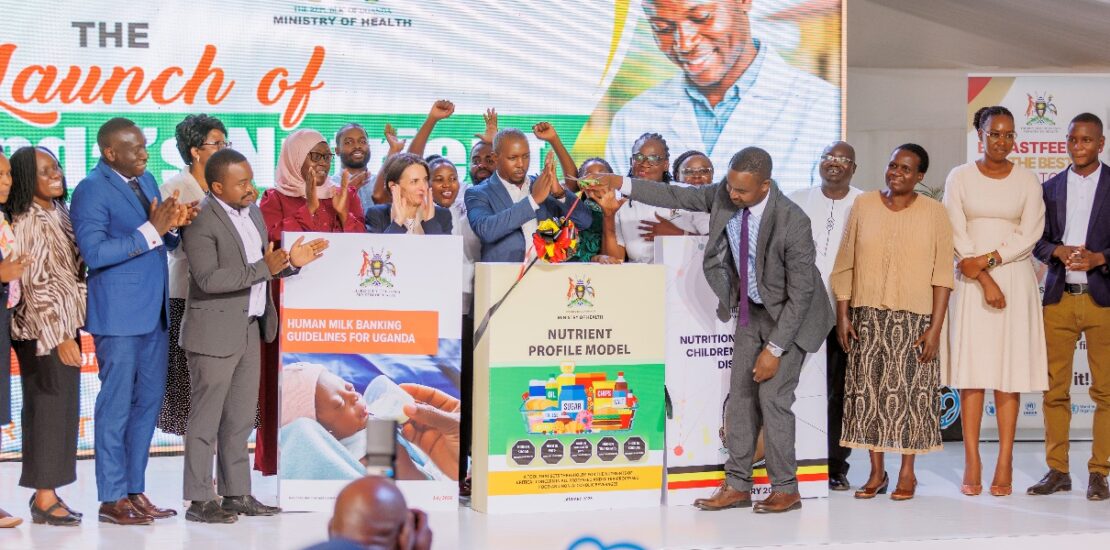
Signed in February and launched in August, the Nutrient Profile Model is a milestone year in the making. It is also, we insist, a starting line.
How much sugar is too much for a juice? How much salt turns a snack from a treat into a risk?
Until this year, Uganda had no official way to answer. Now it does.
Uganda’s Nutrient Profile Model (NPM) was signed on 9 February 2026 and presented to the public at a media briefing on 11 August. On 12 August, it was formally launched at Mulago School of Nursing and Midwifery, alongside World Breastfeeding Week celebrations, the National Human Milk Banking Guidelines and the Nutrition Guidelines for Children with Feeding Disabilities. It was a good day for Ugandan nutrition.
The Ministry of Health estimates that up to 33 percent of deaths in Uganda are linked to non-communicable diseases such as diabetes, heart disease, and obesity related conditions, many driven by diet. At the same time, undernutrition has not gone away. Uganda is fighting on two fronts at once.
The NPM is a scientific method for assessing processed foods and drinks and flagging those with excessive sugar, salt, and unhealthy fats. Think of it as a measuring stick. It gives the government an objective basis for the regulations that should follow, from warning labels to restrictions on marketing unhealthy food to children. Without it, every policy argument risks becoming a matter of opinion. With it, the evidence speaks first.
The NPM identifies the problem. Now Ugandans need to see it on the pack
For CEFROHT, this launch is the result of years of advocacy, technical engagement and partnership with the Ministry of Health, WHO, UNICEF and the Uganda National Food Policy Coalition. Throughout, we kept making the same argument: nutrition is not just a health issue; it is a matter of rights. Consumers should not be left to navigate unhealthy food environments without information or protection.
On launch day, the Ministry of Health recognized CEFROHT as the leading organization for nutrition advocacy. We are proud of that. We also see it as recognition of what civil society can achieve when it brings evidence, patience and persistence to the table.
The moment travelled well beyond Mulago. Television, online and social media carried the story, young advocates drove an X campaign, and the Global Health Advocacy Incubator later highlighted Uganda’s model internationally.
Here is our honest view. A measuring stick sitting in a ministry filing cabinet protects nobody. A mother choosing a breakfast drink for her child will never read the NPM. What she needs is a clear warning on the front of the pack that tells her, at a glance, that the product is high in sugar.
That is why our advocacy now turns firmly to mandatory Front of Pack Warning Labelling (FOPWL). Labels built on the NPM would give every shopper simple, visible information without decoding complicated nutrition panels. They would also lay the foundation for protecting children from junk food marketing and improving food in schools and public spaces.
The NPM gives Uganda the evidence and the framework. The next task is to turn that evidence into something people can see, understand, and use to protect their health.
Help us take the NPM from paper to the shop shelf. Sign the national petition for warning labels, share this story, or partner with us at info@cefroht.org.