
Lawyers, Meet the Heart Doctors: Training Uganda’s Advocates to Take On Trans Fats
- October 3, 2026
- Posted by: Cefroht Manager
- Category: Social Justice
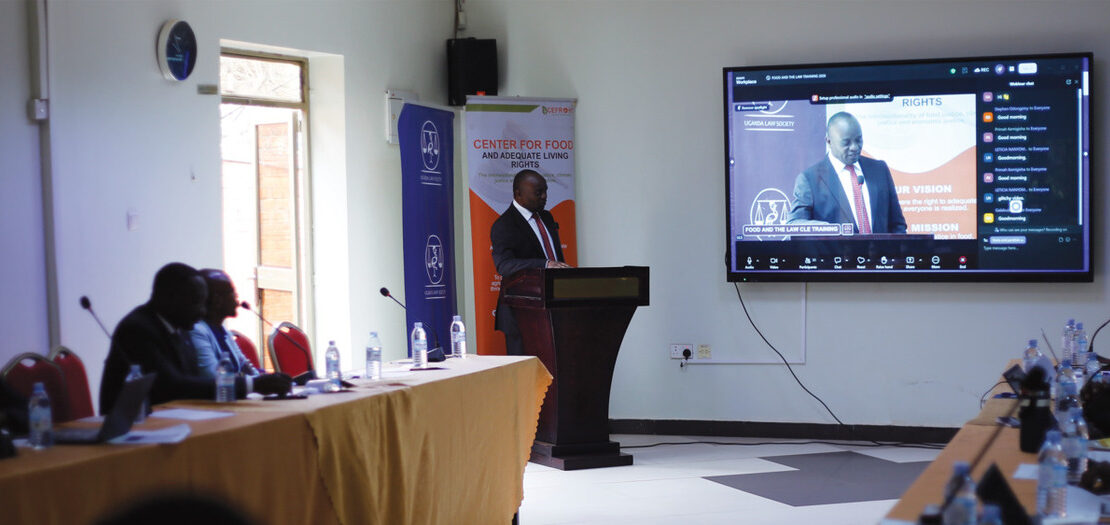
On 8 May, we put lawyers, doctors, food scientists and students in one room in Kampala. The question on the table was a deadly one.
If any lawyer walked in thinking this was just another morning of CLE points, they walked out thinking about their breakfast.
That was the point. On 8 May 2026, CEFROHT and the Uganda Law Society brought lawyers, public health professionals, researchers and law students together in Kampala for a training under our Social Justice and Strategic Litigation Programme. The subject sounds small. It is not. Industrially produced trans fatty acids, or iTFAs, are factory-made fats hiding in some margarines, baked goods and fried snacks. They offer no nutritional value and quietly clog arteries.
Most conversations about healthy eating stop at personal choice. Eat less of this, more of that. We wanted this room to see the bigger picture: what you can choose is shaped long before you reach the shop, by regulation, by marketing, and by what companies are allowed to put in food. And whatever is allowed is, in the end, a legal question.
The science, told plainly
Our Board Chairperson, Prof. Archileo Kaaya, walked participants through the chemistry of food fats: saturated and unsaturated, the hydrogenation process that turns liquid oil into a cheap solid fat, and why that process is the problem. He introduced the World Health Organization’s REPLACE package for eliminating iTFAs and shared early findings on heart disease in Uganda. The lawyers did not sit quietly. They questioned the evidence, the regulation, and their own role, which is exactly what good lawyers do.
Then Dr. Denis Musoga of the Uganda Heart Institute put a number on the stakes. Around 27,000 Ugandans die from cardiovascular disease every year. Behind that figure are families pushed into catastrophic health spending that drains household livelihoods, for illnesses that prevention could have spared them.
Prevention is cheaper than treatment. It is also kinder.
Dr. John Omagino, Executive Director of the Uganda Heart Institute, made the same case: regulation that removes avoidable risks saves lives before anyone reaches a hospital bed.
The uncomfortable question
Dr. Ruhweza raised the issue every regulator eventually faces. Should government start by engaging industry? The room agreed that engagement has its place, especially where products need reformulating. But engagement without enforcement is how good intentions die. Without strong accountability, the regulator risks being captured by the very industry it is supposed to regulate. We share that view. Policies do not protect anyone until somebody is ready to enforce them.
Martin Wambona then took participants through the global picture, from Denmark and the European Union to India, Nigeria and South Africa, and Uganda’s own path, including the work under way between the Ministry of Health, CEFROHT and the Uganda Heart Institute. His message to the lawyers was direct. You are not spectators to public health. You are its advocates, its enforcers, its consumer protection champions and, when necessary, its litigators.
The room talked back
Counsel Brian called on more lawyers to take up the issue. Dr. Ruhweza proposed bringing in the National Curriculum Development Centre, the Attorney General’s chambers and the Directorate of Public Prosecutions, and involving lawyers from the very start of policy development. Students from the Food and Law Club asked us not to let the conversation end there. We will not.
To close, Dr. Charles Oyoo, Commissioner for Non-Communicable Diseases at the Ministry of Health, reaffirmed the Ministry’s commitment to developing iTFA regulations together with legal professionals.
Here is what we believe at CEFROHT. What ends up on your plate is decided by more than your appetite. It is decided by systems, policies and laws. Uganda needs people who can carry the evidence from the laboratory into boardrooms, ministries and courtrooms. On 8 May, that line of defence grew a little stronger.
Are you a lawyer, health professional or student who wants in? Join the next training, bring us a case, or partner with us at info@cefroht.org.