
NPM Launched: A Milestone, Not a Finish Line
- August 14, 2026
- Posted by: Benjamin Wamala
- Category: Advocacy
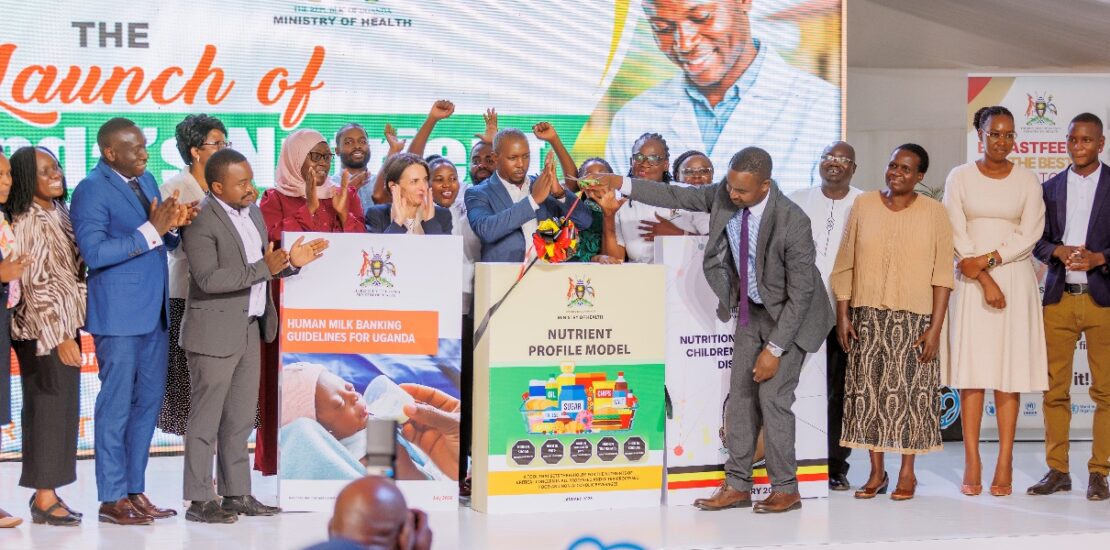
Uganda’s Nutrient Profile Model (NPM) was signed on 9 February 2026 and launched on 12 August 2026 — marking an important milestone in the country’s efforts to create healthier food environments. The NPM was officially presented to the public through a media briefing on 11 August and formally launched on 12 August at Mulago School of Nursing and Midwifery.
The launch comes at a time when Uganda can no longer afford to treat unhealthy diets as a minor public health concern. Ministry of Health data indicate that up to 33 percent of deaths in Uganda are associated with non-communicable diseases linked to diet and other risk factors, including obesity, diabetes and cardiovascular disease.
Uganda is also experiencing a growing burden of overweight and obesity alongside persistent undernutrition, making it increasingly important for the government to address the food environment in which people make dietary choices.
This is where the Nutrient Profile Model becomes particularly important. The NPM provides an evidence-based method for assessing the nutritional composition of processed foods and beverages and identifying products that contain excessive levels of nutrients of concern such as sugar, salt and unhealthy fats.
It gives policymakers an objective basis for stronger regulations, from Front-of-Pack Warning Labelling to restrictions on marketing unhealthy foods to children.
For CEFROHT, the public launch represented the culmination of years of advocacy, technical engagement and collaboration with government and partners. CEFROHT has worked alongside the Ministry of Health, WHO, UNICEF and the Food Policy Coalition to strengthen the evidence and policy case for a nutrient profiling system that can support stronger regulation of unhealthy food products. CEFROHT’s work has consistently connected nutrition policy with the right to adequate food and the right to health, emphasizing that consumers should not be left to navigate unhealthy food environments without adequate information or protection.
The media briefing on 11th August gave journalists an opportunity to understand the science and policy behind the NPM before the formal launch. This was followed on 12th August by the official launch at Mulago, held alongside Uganda’s World Breastfeeding Week celebrations and the launch of the National Human Milk Banking Guidelines and the Nutrition Guidelines for Children with Feeding Disabilities.
CEFROHT was recognized as the leading organisation for nutrition advocacy by the Ministry of Health. The recognition was an important acknowledgement of the role civil society has played in advancing evidence-based nutrition policies and keeping healthier food environments on the national agenda.
The launch also generated significant media attention, with coverage across television, online media and social media. CEFROHT used the moment to ensure that the conversation did not end with the launch of the NPM. Youth advocates also amplified the milestone through an X campaign.
The public recognition of Uganda’s NPM has also extended beyond the country. The Global Health Advocacy Incubator subsequently highlighted Uganda’s model and its significance for nutrition policy, adding international visibility to a process that has involved sustained advocacy by government, civil society and technical partners.
The NPM identifies the problem. Consumers still need a simple way to see the solution, at the shop, at a glance, when choosing what to feed their families. That is why CEFROHT’s advocacy now turns firmly to the next step: translating the NPM into mandatory Front-of-Pack Warning Labelling.
Mandatory FOPWL would place clear, visible warnings on products that exceed established thresholds for sugar, salt and unhealthy fats, giving consumers information they can understand without having to interpret complex nutrition panels.
It will also strengthen the foundation for broader measures to protect children from unhealthy food marketing and improve food environments in schools and other public spaces.
CEFROHT is proud of this milestone. The NPM gives Uganda the evidence and the framework. The next task is clear: turn that evidence into regulation people can see, understand, and use to protect their health.