
EALA Commits to Pass an Agroecology Law for East Africa
- December 24, 2025
- Posted by: CEFROHT Reporter
- Category: Advocacy
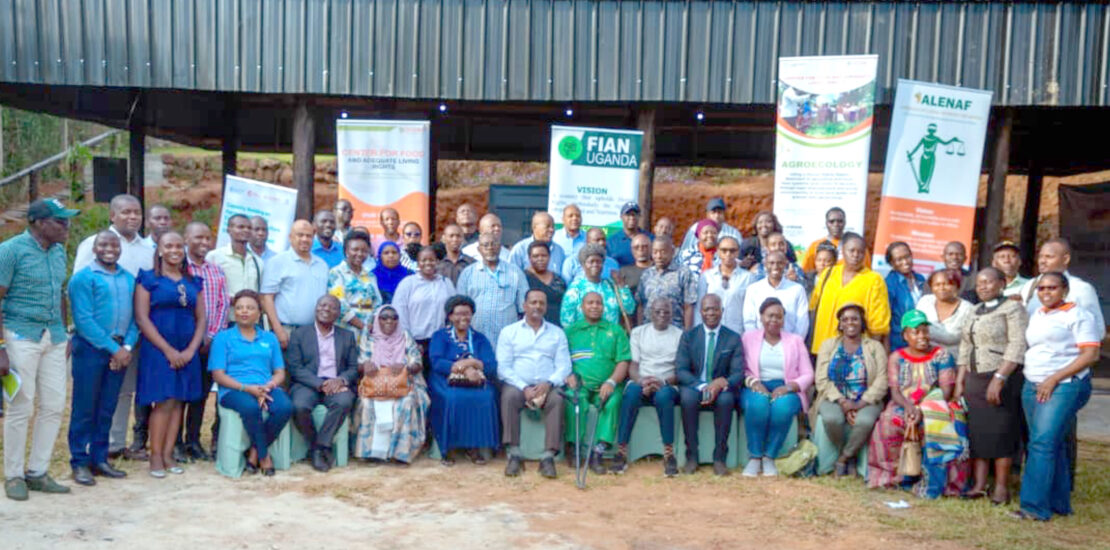
The East African Legislative Assembly (EALA) has taken a major step toward transforming East Africa’s food systems through its commitment to pass an Agroecology Bill for East Africa.
The high-level engagement was organized at the request of EALA leadership and led by the Center for Food and Adequate Living Rights (CEFROHT) in collaboration with a regional civil society coalition including AFSA, PELUM, FIAN, Slow Food, Seed Savers Network, CONSENT, TABIO, and others. The initiative equipped legislators with the technical, legal, and practical understanding needed to advance agroecology through law and policy at the East African Community (EAC) level.
Bridging Policy Gaps with Practical Evidence
East Africa’s food systems are increasingly threatened by climate shocks, soil degradation, biodiversity loss, rising input costs, and heavy reliance on chemical-intensive agriculture. While EALA has already passed a resolution and a motion recognizing agroecology as a priority pathway for climate resilience, food sovereignty, and rural livelihoods, the region still lacks a policy and model law on agroecology.
This gap is particularly evident in existing and emerging frameworks on seeds, biosafety, fertilizers, and food safety, including the East African Seed and Plant Varieties Bill, 2025, which risks undermining farmer-managed seed systems if not aligned with agroecological principles.
To ground policy discussions in real-world experience, the East African Legislative Assembly participated in a hands-on agroecology farm tour at the Nansubuga–CEFROHT Agroecology Learning Centre in Mukono. Legislators witnessed how agroecological practices integrate crops, livestock, soil health, biodiversity conservation, and farmer-managed seed systems to deliver economic, environmental, and social benefits.
The visit demonstrated practical innovations such as organic pest management, intercropping, water conservation, closed-loop nutrient systems using livestock manure, indigenous seed saving, beekeeping for pollination, and income diversification through high-value crops like cinnamon and plantain. For many MPs, the experience marked a turning point in understanding how agroecology works beyond theory.
Evidence That Agroecology Works
The Seed Savers Network–Kenya shared evidence from over 115,000 farming households and 121 community seed banks, highlighting that more than 75% of seeds used by farmers, including sorghum, millet, and sweet potatoes, come from farmer-managed seed systems, not commercial seed companies. The presentations raised critical policy questions about seed sovereignty, biodiversity protection, and the risks of criminalizing indigenous seed saving under current legal frameworks.
Global experiences from Andhra Pradesh, the Sahel, ASEAN, and Latin America further reinforced that agroecology is scalable, climate-resilient, socially inclusive, and economically viable.
Press Conference on agroecology policy and law in East Africa
The capacity-building initiative was accompanied by a press conference involving EALA representatives, civil society, agroecology farmers, and media. The engagement reached over 3.5 million people across East Africa through national television, radio, print, online platforms, and social media, significantly amplifying public awareness and support for agroecological reforms. The press conference highlighted the growing crisis in East Africa’s food systems, characterized by climate shocks, soil degradation, biodiversity loss, widespread use of highly hazardous pesticides, rising input costs, which continues to threaten both food safety and food security, and degradation of ecosystems generally. The press conference also highlighted the absence of a clear regional agroecology policy and legal framework, which makes agroecology vulnerable and leaves indigenous seeds, farmer-managed seed systems, and smallholder farmers, who produce the majority of the region’s food, vulnerable and without adequate protection and support.
Agroecology was presented as the most practical and sustainable solution to these challenges, as it restores soil health, enhances biodiversity, reduces agro-input use, and ensures that communities have access to adequate and nutritious food.
The public, especially smallholder farmers, were urged to join the movement and support the legal and policy reforms on agroecology, while the policy makers at national and regional levels were requested to work on policies and laws to support agroecology in their areas of jurisdiction.
Political Commitments From East Africa Legislative Assembly
A multi-stakeholder panel discussion and closing session resulted in concrete political commitments. EALA Members:
- Committed to developing an Agroecology Bill, to be introduced as a Private Member’s Bill;
- Requested technical support from CEFROHT and AFSA in research, evidence generation, and legislative drafting;
- Resolved to establish a dedicated committee to lead the agroecology legislative process;
- Reiterated the urgent need to ban Highly Hazardous Pesticides (HHPs) across the region;
The Chairperson of the EALA Committee on Agriculture, Tourism and Natural Resources in his closing remarks, outlined a clear roadmap toward tabling the Agroecology Bill, beginning with a preliminary report and broad consultations with civil society and technical experts.
Figure 1: Hon. Gideon Gatpan, the chairperson EALA-ATNR commits to expediting the Agroecology law formulation processes at the EAC.
A Turning Point for East Africa’s Food Systems
The capacity building marked a historic turning point in positioning agroecology at the center of regional agricultural governance. By linking science, farmer experience, and law-making, and with EALA’s commitment to develop an Agroecology Law, civil society and policymakers are now working together to lay a strong foundation for an East African policy and legal framework that safeguards public health, protects seed sovereignty, strengthens smallholder farmers, and builds resilient, equitable, and climate-resilient food systems across the region.
Hyper Links
Watch sessions of the capacity building here
https://youtu.be/dYqrRiiinfQ?si=izS0Te101-hVn4Pz
https://www.youtube.com/live/ptyjeNsXmz4?si=JVIBDcW8c_F67L5S