
From Rome to the School Canteen: What Rome Nutrition Week Means for Uganda’s Children
- October 3, 2026
- Posted by: Cefroht Manager
- Categories: Advocacy, News Updates
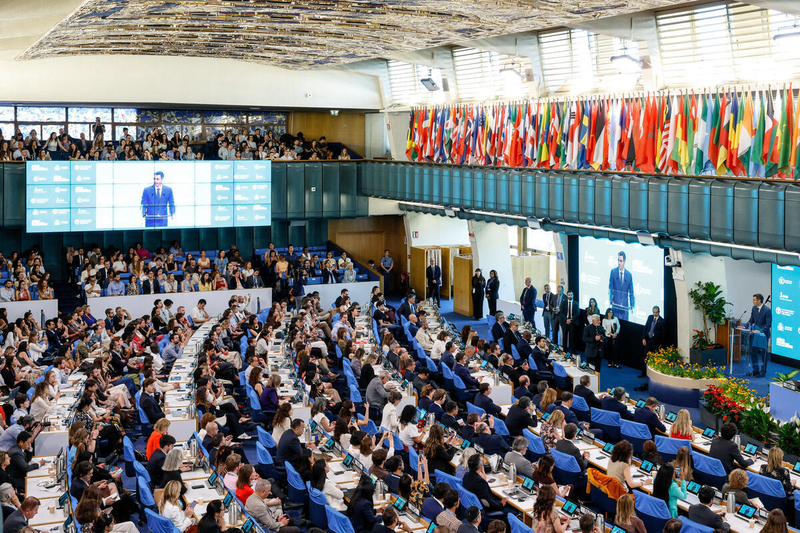
In May, CEFROHT joined the United Nations’ food agencies in Rome. The ideas were global. The lessons were about the plates of Ugandan children.
Is a school lunch charity, or is it a right?
That question followed us all the way to Rome. From 25 to 28 May 2026, CEFROHT took part in Rome Nutrition Week, organized by the Food and Agriculture Organization of the United Nations together with the International Fund for Agricultural Development, the World Food Programme and UN Nutrition. The theme was “Shaping the Future of Joint Nutrition Action in a Changing World.”
Governments, researchers, development partners and civil society spent four days on one challenge: how to work together so that nutrition progress moves faster. Our answer, as always, started with a principle. Adequate, nutritious food is not charity. It is a human right, and under international law, governments are obliged to create the policies, laws, and food environments that make it real.
What Rome looks like from Uganda
Everything discussed in Rome is visible in Uganda every day. Many families still struggle to put enough nutritious food on the table. At the same time, unhealthy food environments are fueling obesity, hypertension, and diabetes. Blaming individuals for both is easy. It is also wrong. CEFROHT focuses on the systems that shape what people eat.
The child we keep thinking about
National data show that around 2.9 million Ugandan children, thirteen percent, are orphans, and that orphaned children attend school far less than their peers. Around 21 percent of school-going children are orphaned or too vulnerable to count on a meal at home.
Now imagine a school feeding system that depends on parents paying. Who gets left out? Exactly the children who need a meal most, including those in child-headed households.
A school meal that depends on a parent’s pocket will always miss the child with no parent at all.
That is why CEFROHT is advocating for a government-led school feeding model that treats meals as an investment in children’s right to food, health and education, and that keeps them in class, learning and growing.
From evidence to rules people can see
Uganda’s new Nutrient Profile Model is an important step, giving the country an evidence based way to identify foods high in salt, sugar and unhealthy fats. But evidence on its own changes little. Together with the Uganda National Food Policy Coalition, we are pushing to turn it into mandatory Front of Pack Warning Labelling, stronger limits on marketing unhealthy food to children, and healthier food standards in schools and public institutions. Children should not have to find their way through shops where junk food is everywhere and its risks are hidden.
What encouraged us
Rome showed us that the issues we champion at home are now recognised globally as essential to effective nutrition action. We exchanged experiences, learnt from other countries, and heard again and again that progress needs health, agriculture, education, trade, consumer protection and law working together. That last word is where CEFROHT comes in. We do not only ask whether people have food. We ask whether the laws and systems in place allow everyone to enjoy their right to adequate food and health.
Rome strengthened our resolve. Global commitments mean little until they become laws that protect the most vulnerable child in the poorest school in Uganda.
Join us in turning global promises into local protection. Support our school feeding and food labelling advocacy, or partner with us at info@cefroht.org.