
Hungry and Overfed in the Same Classroom: Parliamentary Nutrition Week Takes Children’s Nutrition to Busoga
- June 28, 2026
- Posted by: Benjamin Wamala
- Category: Advocacy
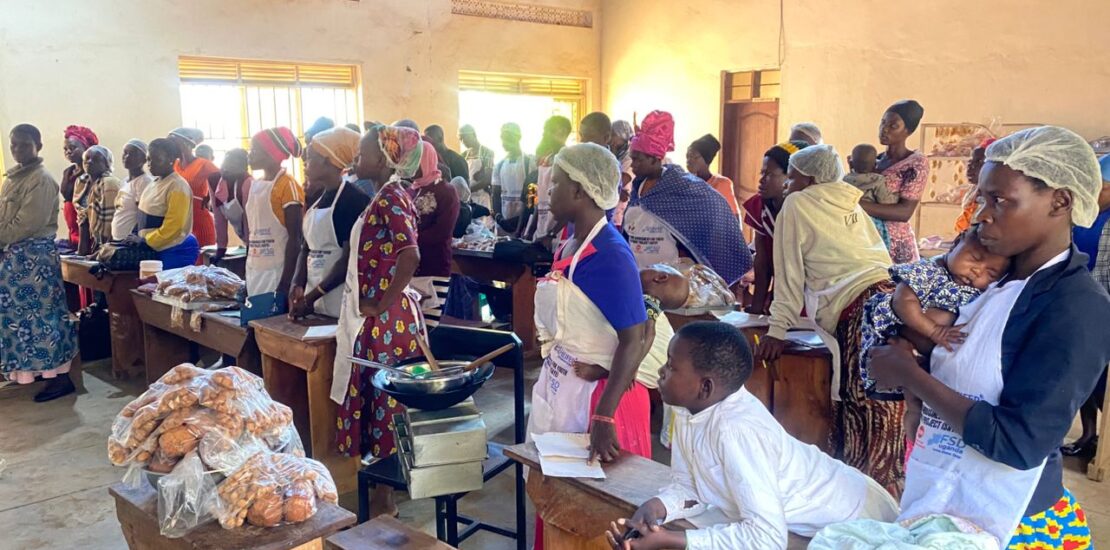
From 22 to 26 June, we joined lawmakers and partners in Busoga to ask a hard question: why are so many Ugandan children going without the food they need?
Picture two children in the same classroom in Busoga.
One arrived without breakfast and will not eat until evening. The other had a sugary drink and a packet of crisps on the way to school, bought at the gate where they are sold cheaply and advertised brightly. They look like opposite problems. They are actually the same one: a food system that does not guarantee children a healthy diet.
That was the heart of Parliamentary Nutrition Week, which CEFROHT, the Uganda Parliamentary Alliance on Nutrition and Food Security, and partners took to the Busoga sub-region from 22 to 26 June 2026.
The numbers that should keep us awake
Nearly one in two Ugandan children under 19 lives in multidimensional poverty, including deprivation of food and nutrition. Among children aged 6 to 23 months, 86 percent live in child food poverty, and 24 percent in severe food poverty, without the variety of foods they need to grow well. Meanwhile, 3.4 percent of children under five are already overweight, and a third of Ugandan adults are overweight or obese.
Hunger and obesity, side by side. If anyone still thinks nutrition is a matter of personal choice, those figures should settle the argument. It is a policy issue.
A child who goes to school hungry and a child surrounded by junk food are living two sides of the same failure.
A national education assessment found that only 17 percent of pupils were receiving at least one meal at school. Where meals exist, access often depends on whether parents can pay or send food.
We think that is the wrong way around. CEFROHT is calling for a government-led school feeding model that treats school meals as an investment in children’s rights to food, health and education. A system that leaves meals to parents will always leave behind orphans, children in child-headed households and every child whose home cannot provide a steady meal. Those are precisely the children who need it most.
During school and community visits, our team documented how easily children can find and buy foods high in sugar, salt, and unhealthy fats, and how heavily they are promoted. Feeding children is only half the job. We must also protect them from food environments built to sell them the wrong things.
That is why we used the Week to push for mandatory Front of Pack Warning Labelling (FOPWL), clear warnings on products high in sugar, salt and unhealthy fat, alongside limits on marketing unhealthy food to children. Uganda’s Nutrient Profile Model already gives the scientific basis for deciding which products need a warning.
Leaders who signed on, literally
The response was encouraging. Local government leaders in Busoga signed the citizens’ petition for mandatory FOPWL and committed to carry the call to Parliament and the Ministry of Health. Members of Parliament from the Eastern region and the Mayor of Jinja City joined the community mobilization. On Smart FM and NBS Radio, lawmakers and local leaders took the conversation into thousands of homes, and the Week’s celebrations came together at Nakalama Primary School.
Every photograph, observation, and testimony gathered in Busoga will now feed into our research on unhealthy food environments and strengthen the national case for warning labels.
Every Ugandan child deserves a full plate and an honest label. Sign the FOPWL petition, support our school feeding advocacy, or partner with us at info@cefroht.org.