
The Story Behind the Label: 30 Journalists Trained to Report on Uganda’s Food Warning Labels
- June 19, 2026
- Posted by: Benjamin Wamala
- Category: Advocacy
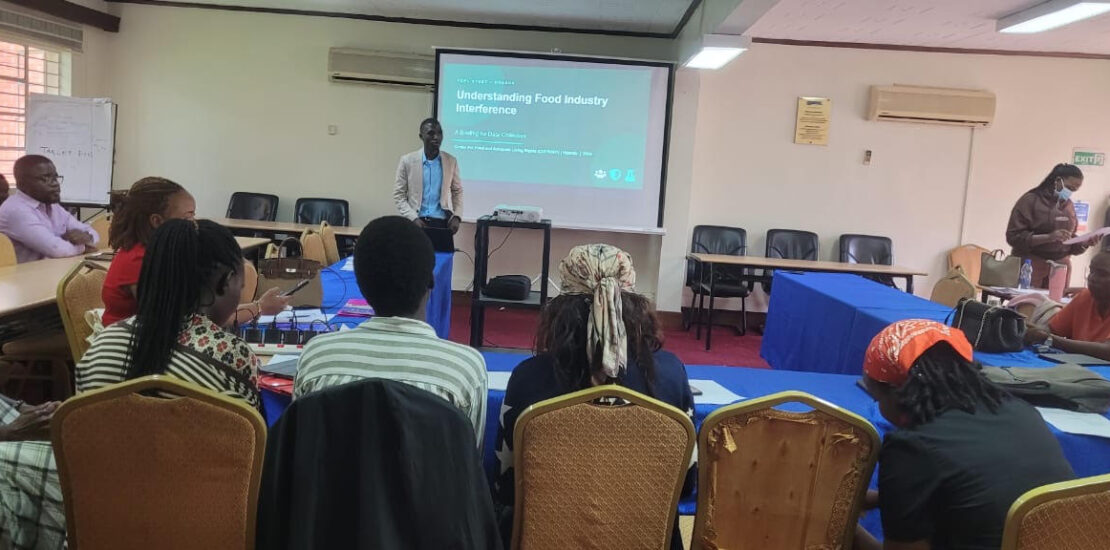
On 19 June, we sat down with reporters from television, radio, print and online. They left ready to explain a regulation that could change every shop shelf in the country.
Is it a regulation or a standard?
It sounds like a small question. But if a journalist gets the answer wrong on air, thousands of listeners get it wrong with them. That is exactly why, on 19 June 2026, CEFROHT invited 30 journalists and media practitioners from television, radio, print and online platforms to a half-day training in Kampala on Uganda’s proposed Front of Pack Warning Labelling regulation, known as FOPWL.
The idea behind FOPWL is simple. When a packaged food or drink contains too much sugar, salt or unhealthy fat, it should carry a clear warning on the front of the pack, where you actually look, rather than a crowded table of numbers on the back that almost nobody reads.
Simple ideas still need good storytellers. So we trained some.
Twenty-seven of the participants had worked with CEFROHT before. Three were brand new to the subject. That mix turned out to be a gift, with seasoned reporters helping newcomers find their footing. We started with a short test to see what everyone already knew. By the end, a second test showed a clear jump in understanding.
In between, Prof. Charles Muyanja walked the room through the proposed regulation: what warning labels are, why Uganda needs a mandatory, evidence-based system, and how the country’s Nutrient Profile Model identifies products that cross the line on sugar, salt, and unhealthy fats. Journalists explored the legal foundation in the Public Health (Amendment) Act, 2023, and learned to tell the difference between the FOPWL regulation, the FOPWL standard, and related measures such as restricting the marketing of unhealthy food to children.
Then came the fun part. Using real products from Ugandan shelves, participants practiced turning technical detail into plain language a mother in Mukono or a student in Gulu could follow. We also introduced a human rights approach to reporting, linking diet-related disease to the right to health and the right to adequate food.
A newsroom that understands food policy is harder to mislead.
The conversation in the corridor
The most revealing moment was not on the slides. Journalists spoke openly about the pressure that reaches newsrooms from the food and beverage industry: sponsored content, glossy campaigns for sugary and salty products, and stories framing public health rules as a threat to trade and local manufacturing.
We will say it plainly. When an industry spends heavily to shape the story, the public deserves reporters who can spot the angle. That is why, for CEFROHT, training journalists is about more than
accuracy. It is about building a media community that can question competing interests and hold power to account.
From the training room to the airwaves
We did not have to wait long for results. Within days, several participants were publishing stories and broadcasts on FOPWL and Uganda’s rising burden of diet-related disease, on their own initiative.
The conversation continues on a dedicated WhatsApp platform where we share updates as the policy moves forward. Next, we are planning follow-up engagements and a workshop for editors, the gatekeepers who decide which stories reach the public at all.
Are you a journalist or editor who wants to report on food and health with confidence? Join our next media engagement, or partner with us to train more newsrooms at info@cefroht.org.