
Uganda’s school feeding case: A partial win, a full commitment, and a government now on notice.
- May 2, 2026
- Posted by: Cefroht Manager
- Category: Social Justice
Early this year, CEFROHT received judgment in the School Feeding Case.
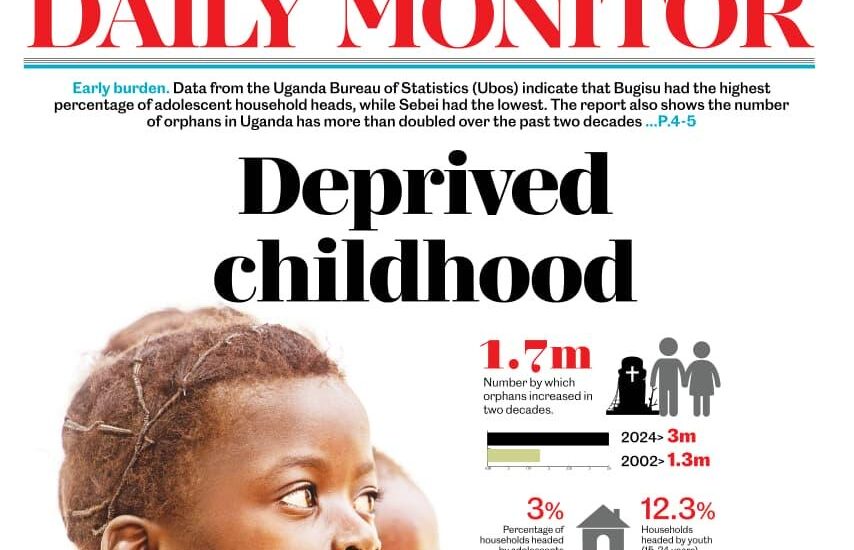
The School Feeding case challenged the constitutionality of the ministerial guidelines on an ‘ONLY’ parent-led school feeding program in government/ UPE schools, irrespective of the fact that 21% of school-going children are orphaned, or too vulnerable to even afford a meal at home.
In the case, we presented statistics showing that some homesteads are child-led, with no adults, and therefore could not bear the burden of feeding themselves while at school. The respondents raised a preliminary objection stating that the case did not raise any questions for constitutional interpretation.
In the judgment, the court recognized that the case raised several questions for constitutional interpretation and had been brought well within its jurisdiction. The court recognized that the government had made significant milestones since filing the case in 2023 to show progressive commitment towards the realization that all children in school are provided with food. The government had embarked on several initiatives, including working on a school feeding policy that was aimed at ensuring that all children in school get a meal.
Based on this, the government had shown commitment towards fulfilling its constitutional mandate since filing the case in 2023, and therefore, there was no need for the court to declare itself on the same.
The Court further recognized the public interest nature of the case and held that each party bears its own costs.
The judgment from this case remains a huge controversy on our end as civil society, lawyers and justice actors. The judgment did not adequately answer the question on who bears the responsibility to provide food to orphans and vulnerable children.
Although the honourable justices emphasized that the UPE and UPPET guidelines provide for how orphans and vulnerable children will be fed while in school, court omitted to look into the substance of these provisions. The substance of these provisions mandates other parents “who can afford’’ and the schools to work together to provide food to orphaned and vulnerable children.
However, there is no legal basis for this. There is no contractual/legal/moral obligation between vulnerable children and other parents or the schools to which they go to provide for them food where the children cannot afford to feed themselves. This obligation lies with government by the doctrine of the social contract, by Article 11 of the International Covenant on Economic Social and Cultural Rights, by General Comment no 12 on the right to adequate food, by objective 22 of the Constitution of Uganda and several legal instruments.
A publication on 20th March 2026 shows that the statistics are getting worse on orphaned children and children led households.